
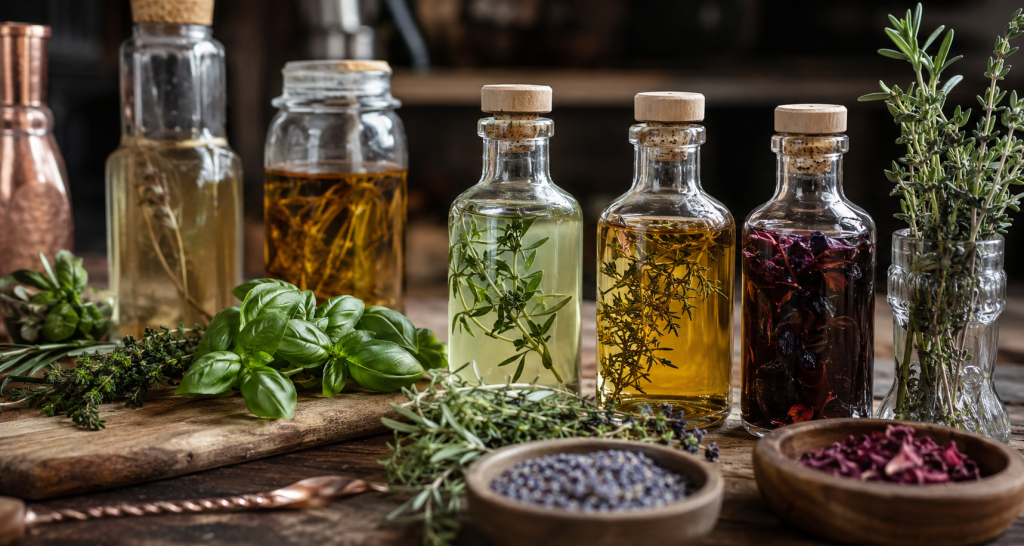
In the world of bartending and culinary arts, flavor is everything. While fresh ingredients, premium spirits, and quality produce form the foundation of exceptional food and beverages, one technique consistently helps professionals create distinctive and memorable experiences: herbal infusion.
Herbal infusions have been used for centuries in cooking, medicine, and beverage preparation. Today, they remain one of the most versatile tools available to bartenders, chefs, and hospitality professionals seeking to develop unique flavor profiles and enhance their menus naturally. Whether it’s a rosemary-infused gin, a basil-infused syrup, or a lavender-infused olive oil, herbal infusions offer endless opportunities for creativity.
What are herbal infusions?
An herbal infusion is the process of extracting flavors, aromas, and beneficial compounds from herbs by steeping them in a liquid. The liquid acts as a carrier, absorbing the essential oils and flavor compounds contained within the herbs.
Depending on the desired outcome, the infusion medium may include: water, alcohol, vinegar, oil, syrup, cream, honey.
The result is a liquid that captures the essence of the herb, which can then be used in recipes, cocktails, sauces, marinades, dressings, desserts, and many other applications.
Unlike simple seasoning, infusions allow flavors to become fully integrated into a liquid, creating depth and complexity that cannot always be achieved through direct herb additions alone.
Why herbal infusions matter in hospitality
Today’s guests increasingly seek unique and authentic dining and drinking experiences. Herbal infusions provide a natural way to create signature flavors while showcasing fresh ingredients.
Enhanced flavor complexity
Infusions introduce subtle layers of flavor that can transform an ordinary dish or cocktail into something memorable.
Menu differentiation
Signature infused spirits, syrups, oils, and sauces help establish a unique identity for restaurants, bars, and catering operations.
Seasonal creativity
Herbs can be selected based on seasonal availability, allowing establishments to create limited-time offerings that keep menus fresh and exciting.
Reduced reliance on artificial flavoring
Natural infusions provide authentic flavor without the need for artificial additives or concentrates.
Increased perceived value
Guests often appreciate handcrafted elements. An infusion demonstrates attention to detail and craftsmanship that can elevate the overall guest experience.
Common herbs used for infusions
Many herbs lend themselves beautifully to infusion. Each offers distinct aromatic characteristics and culinary applications.
Rosemary
Rosemary provides pine-like, earthy notes that pair exceptionally well with: gin, vodka, olive oil, roasted meats, citrus-based cocktails
Basil
Basil contributes fresh, sweet, and slightly peppery notes.
Popular uses include: cocktail syrups, tomato sauces, salad dressings, lemonades, vinegars
Mint
Mint remains one of the most popular herbs for infusion. Applications include: mojitos, tea infusions, syrups, desserts, fruit-based cocktails. Mint creates refreshing, cooling characteristics that guests immediately recognize.
Thyme
Thyme delivers savory, earthy complexity. Ideal for: gin infusions, poultry marinades, cream sauces, roasted vegetables, craft cocktails.
Lavender
Lavender offers floral, aromatic notes that can create elegant flavor profiles when used carefully. Popular applications include: simple syrups, gin infusions, desserts, lemonades, sparkling cocktails.
Overuse can create a soapy taste, so balance is essential.
Sage
Sage brings warm, earthy, slightly peppery characteristics. Frequently used in: bourbon infusions, brown butter sauces, autumn cocktails, stuffing recipes, seasonal menus.
Herbal infusions in bartending
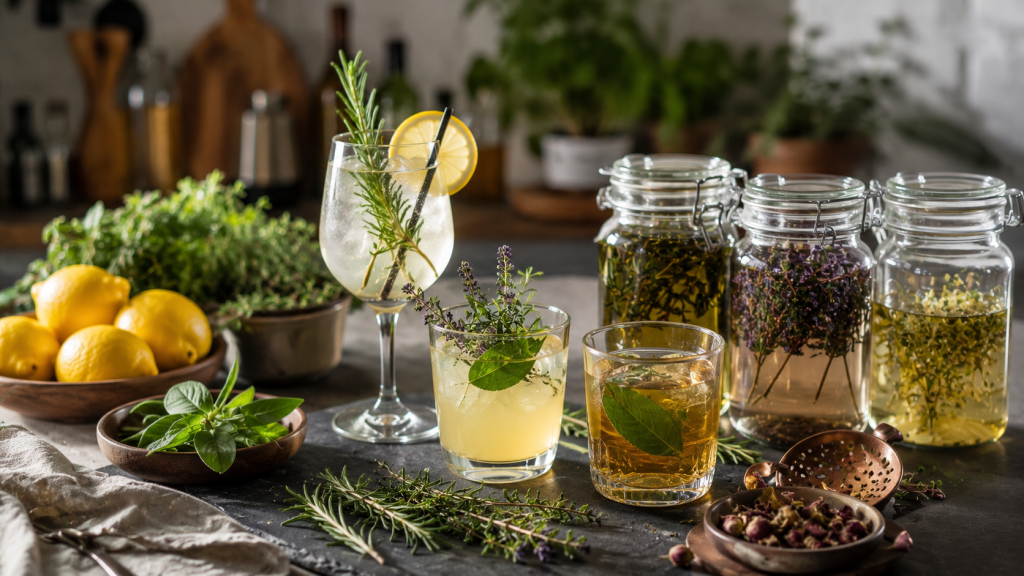
The craft cocktail movement has embraced infusions as a cornerstone technique for developing house-made ingredients and signature drinks.
Infused spirits
One of the most common applications is infusing spirits with herbs. Examples include: rosemary-infused gin, basil-infused vodka, thyme-infused tequila, lavender-infused gin, sage-infused bourbon. The infusion process typically involves steeping fresh or dried herbs directly in the spirit for several hours or days until the desired flavor intensity is achieved.
Herbal Simple Syrups
Simple syrup serves as an excellent vehicle for herbal flavors. Popular examples: mint syrup, basil syrup, rosemary syrup, lavender syrup, lemon thyme syrup. These syrups can add sweetness and aromatic complexity simultaneously.
Herbal Infusions in Cooking
Chefs use herbal infusions to add flavor throughout every stage of food preparation.
Infused oils
Herb-infused oils are among the simplest and most effective culinary infusions. Examples include: rosemary olive oil, basil oil, thyme oil, garlic and herb oil.
These oils can be used for: salad dressings, bread dipping, finishing dishes, grilling, roasting.
Infused vinegars
Herb-infused vinegars provide acidity alongside aromatic complexity. Common examples: tarragon vinegar, basil vinegar, rosemary vinegar, thyme vinegar. These are ideal for vinaigrettes, marinades, and pickling applications.
Infused creams and dairy
Cream readily absorbs herbal flavors. Examples include: lavender cream for desserts, thyme cream for sauces, basil cream for pasta dishes. The result is a rich and nuanced flavor profile.
Infused broths and stocks
Many professional kitchens infuse herbs into stocks and broths during preparation. This technique creates depth without overpowering the finished dish.
How to make an herbal infusion
While methods vary depending on the liquid used, the basic process remains straightforward.
Step 1: Choose quality herbs
Use fresh, vibrant herbs whenever possible.
Look for: bright color, strong aroma, no wilting, no discoloration.
Step 2: Select the infusion medium
Choose the liquid based on the intended application. Examples: alcohol for cocktails, oil for cooking, vinegar for dressings, syrup for beverages.
Step 3: Combine ingredients
Place herbs into a sanitized container and cover completely with the chosen liquid.
Step 4: Steep
Steeping times vary significantly. Approximate guidelines: tea infusions (5–15 minutes), syrups (20–60 minutes), spirits (24 hours to several days), oils (several hours to multiple days).
Taste periodically to monitor flavor development.
Step 5: Strain
Once the desired flavor is reached, strain the herbs using a fine mesh strainer or cheesecloth.
Step 6: Store properly
Store infusions according to food safety guidelines.
Most infused syrups require refrigeration, while infused spirits generally have a longer shelf life.
Best Practices for Successful Infusions
To achieve consistent results:
– Start with small test batches.
– Label all infusions clearly.
– Monitor steeping times carefully.
– Avoid over-infusion.
– Use sanitized equipment.
– Taste frequently during development.
– Document recipes for consistency.
Professional bars and kitchens often maintain detailed infusion logs to ensure repeatable results.
The future of herbal infusions
As consumers continue to seek fresh, natural, and handcrafted experiences, herbal infusions are likely to play an even larger role in modern hospitality. Bartenders and chefs are increasingly experimenting with local herbs, foraged ingredients, and seasonal botanicals to create products that reflect their region and culinary philosophy. From house-infused spirits and artisanal syrups to aromatic oils and sophisticated sauces, infusions provide a powerful way to transform simple ingredients into exceptional culinary experiences.


Leave a Reply