
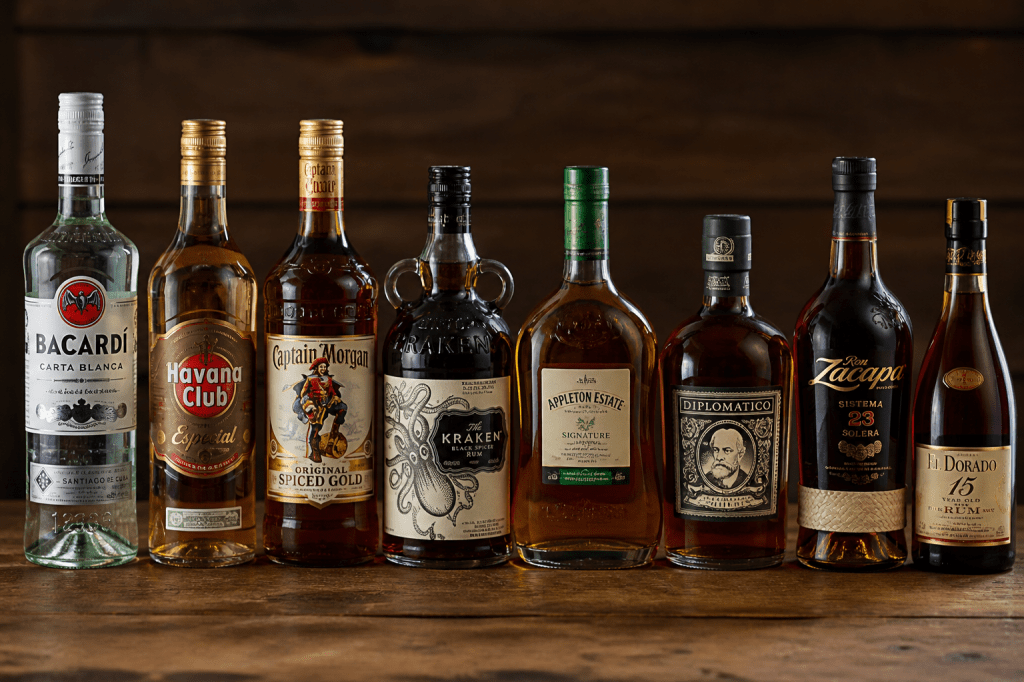
Rum occupies a unique position in the global spirits landscape. It is simultaneously one of the oldest distilled spirits and one of the most diverse, spanning a wide spectrum of production techniques, flavor profiles, and cultural identities.
Historical evolution: from byproduct to prestige
The story of rum begins with sugarcane, a crop originally cultivated in Southeast Asia and later introduced to the Caribbean by European colonizers in the late 15th and early 16th centuries. As sugar production intensified, molasses—a viscous byproduct of sugar refining—became abundant. Plantation workers and early distillers discovered that molasses could be fermented and distilled into alcohol, giving rise to proto-rum.
By the 17th century, rum production was firmly established in Caribbean colonies such as Barbados and Jamaica. Early rum was unrefined and often harsh, but its economic value quickly became apparent. It became deeply embedded in maritime culture, naval rations, and colonial trade systems. Notably, rum was a central commodity in the triangular trade, linking Europe, West Africa, and the Americas—an association that underscores the spirit’s complex and often troubling historical context.
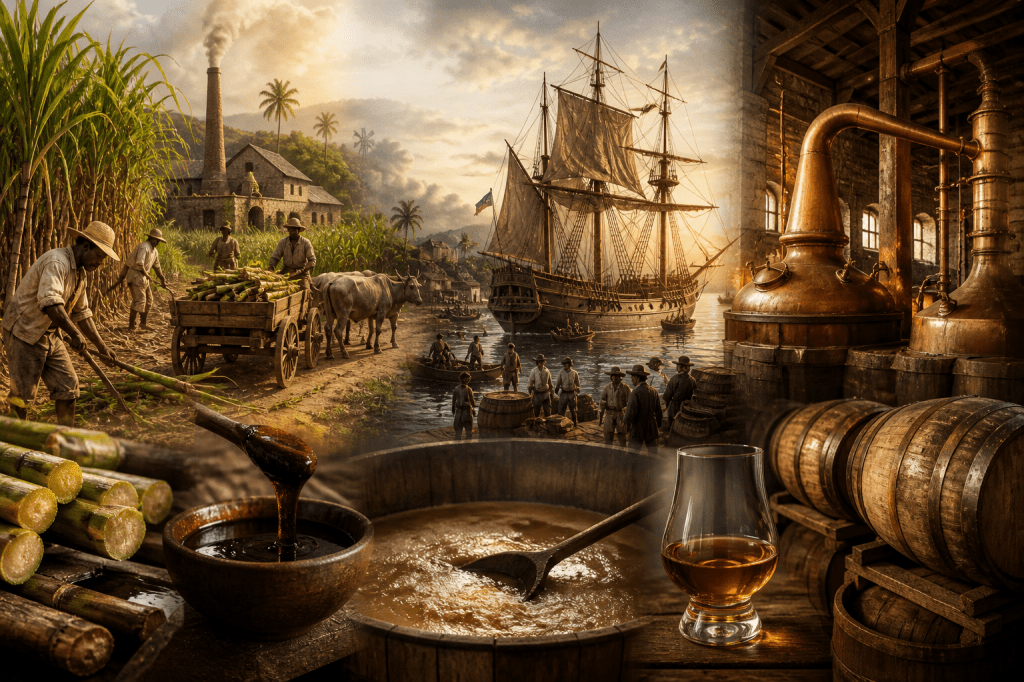
Technological advancements in distillation during the 18th and 19th centuries improved quality and consistency. The introduction of pot stills and later column stills allowed producers to refine flavor profiles and increase efficiency. Aging in oak barrels—often repurposed from bourbon or wine—added another dimension, transforming rum into a more sophisticated product. In the 20th and 21st centuries, rum has undergone a renaissance. Premiumization, transparency in production, and growing consumer interest in terroir and craft have elevated rum into the same conversation as whiskey, cognac, and other high-end spirits.
Raw materials and production methods
Understanding rum requires a technical examination of its inputs and processes.
Rum can be produced from two primary raw materials: molasses and fresh sugarcane juice. Molasses-based rums dominate globally due to efficiency and availability, while cane juice rums (notably agricole styles) emphasize freshness and terroir.
Fermentation is a critical stage that significantly impacts flavor. Short fermentations tend to produce lighter, cleaner rums, while extended fermentations encourage the development of esters—compounds responsible for fruity, sometimes “funky” aromas.
Distillation methods vary:
- Pot still distillation produces heavier, more complex rums with pronounced congeners.
- Column still distillation yields lighter, cleaner spirits with higher alcohol purity.
Aging further refines rum. Tropical aging, common in the Caribbean, accelerates interaction between spirit and wood due to higher temperatures, resulting in rapid flavor development but also higher evaporation (the “angel’s share”).
Blending is another key practice. Master blenders combine rums of different ages and styles to achieve consistency or complexity, making rum production both a science and an art.
Classification and styles of rum
While there is no universally enforced classification system, several broad categories help structure understanding:
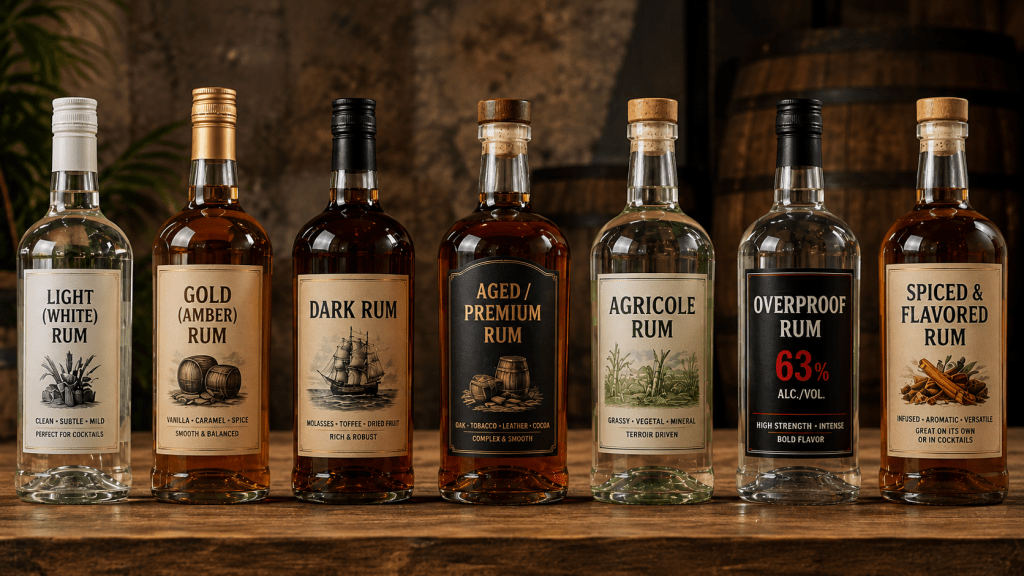
Light (White) Rum
Typically unaged or briefly aged and filtered, these rums are subtle, clean, and often used in cocktails. They emphasize neutrality with slight sweetness and mild cane notes.
Gold (Amber) Rum
Aged for moderate periods, these rums develop notes of vanilla, caramel, and light spice from oak interaction. They offer more body than white rums without the intensity of darker styles.
Dark Rum
Longer aging and heavier distillation methods produce dark rums with robust flavors—molasses, toffee, dried fruit, and spice. Some may include caramel coloring for consistency.
Aged or Premium Rum
Designed for sipping, these rums undergo extended maturation. They exhibit layered complexity comparable to aged whiskey, including notes of oak, tobacco, leather, and cocoa.
Agricole Rum
Produced from fresh sugarcane juice, primarily in French territories, agricole rum is characterized by grassy, vegetal, and mineral notes. It reflects terroir more directly than molasses-based rums.
Overproof Rum
High-alcohol rums (often exceeding 50% ABV) used in both cocktails and culinary traditions. They deliver intense flavor concentration.
Spiced and flavored Rum
Infused with botanicals or flavorings, these rums cater to broader audiences but are generally less relevant in formal tasting contexts.
A structured tasting approach
Professional rum evaluation relies on organoleptic assessment—the systematic use of sensory perception.
Appearance
Color can indicate aging and cask influence, though it is not always reliable due to potential additives. Observing viscosity (“legs” on the glass) can provide clues about body and alcohol content.
Aroma (Nosing)
Nosing is arguably the most informative stage. Compounds such as esters, aldehydes, and phenols contribute to aromatic complexity. Common notes include tropical fruit, caramel, vanilla, spice, and vegetal elements.
Palate
The tasting phase should be broken into three stages:
- Entry: initial impression (sweetness, alcohol heat)
- Mid-palate: development of core flavors
- Finish: length and persistence of aftertaste
Mouthfeel
Texture ranges from light and crisp to heavy and oily. This is influenced by distillation method, aging, and residual compounds.
A disciplined tasting approach involves controlled conditions, neutral glassware, and sometimes dilution with water to reveal hidden aromas.
Flavor profiles by region
Regional identity plays a central role in rum characterization.
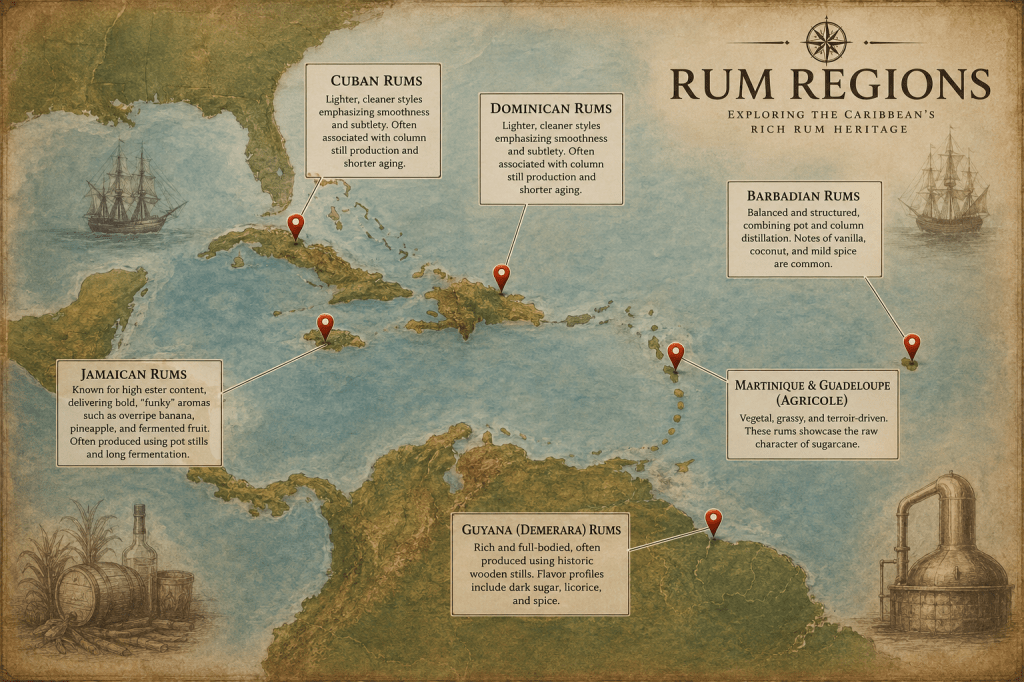
Jamaican Rums
Known for high ester content, delivering bold, “funky” aromas such as overripe banana, pineapple, and fermented fruit. Often produced using pot stills and long fermentation.
Barbadian Rums
Balanced and structured, combining pot and column distillation. Notes of vanilla, coconut, and mild spice are common.
Cuban and Dominican Rums
Lighter, cleaner styles emphasizing smoothness and subtlety. Often associated with column still production and shorter aging.
Martinique and Guadeloupe (Agricole)
Vegetal, grassy, and terroir-driven. These rums showcase the raw character of sugarcane.
Guyana (Demerara) Rums
Rich and full-bodied, often produced using historic wooden stills. Flavor profiles include dark sugar, licorice, and spice.
Food pairings
Pairing rum with food requires alignment of structural elements—sweetness, intensity, acidity, and texture.
Light Rums
Pair with seafood, oysters, ceviche, and light salads. Their subtlety complements delicate dishes without overwhelming them.
Gold Rums
Work well with roasted chicken, pork, and grilled vegetables. Caramel and vanilla notes enhance Maillard-driven flavors.
Dark and Aged Rums
Best paired with robust dishes—braised beef, barbecue, smoked meats, and aged cheeses. Their depth matches intensity.
Agricole Rums
Ideal with fresh, herbaceous foods such as goat cheese, green salads, and dishes featuring herbs like parsley or cilantro.
Dessert Pairings
Rum naturally aligns with desserts featuring chocolate, caramel, banana, coconut, and spices. Aged rum with high-cocoa dark chocolate creates a balanced interplay of bitterness and sweetness.
Additionally, rum can be used as an ingredient in gastronomy—deglazing sauces, flambéing desserts, or enhancing marinades.
Modern trends and industry direction
The contemporary rum industry is undergoing significant transformation. Consumers increasingly demand transparency in labeling, including information on aging, additives, and origin. Independent bottlers and craft distilleries are challenging traditional brands by emphasizing authenticity and experimentation.
Cask finishing—using barrels previously containing wine, sherry, or other spirits—is expanding flavor diversity. Meanwhile, sustainability initiatives in sugarcane farming and production are gaining importance.
Rum festivals, tasting events, and educational platforms are contributing to a more informed consumer base, shifting perception from a cocktail ingredient to a serious sipping spirit.
 Bar and Bites Consulting
Leave a comment