
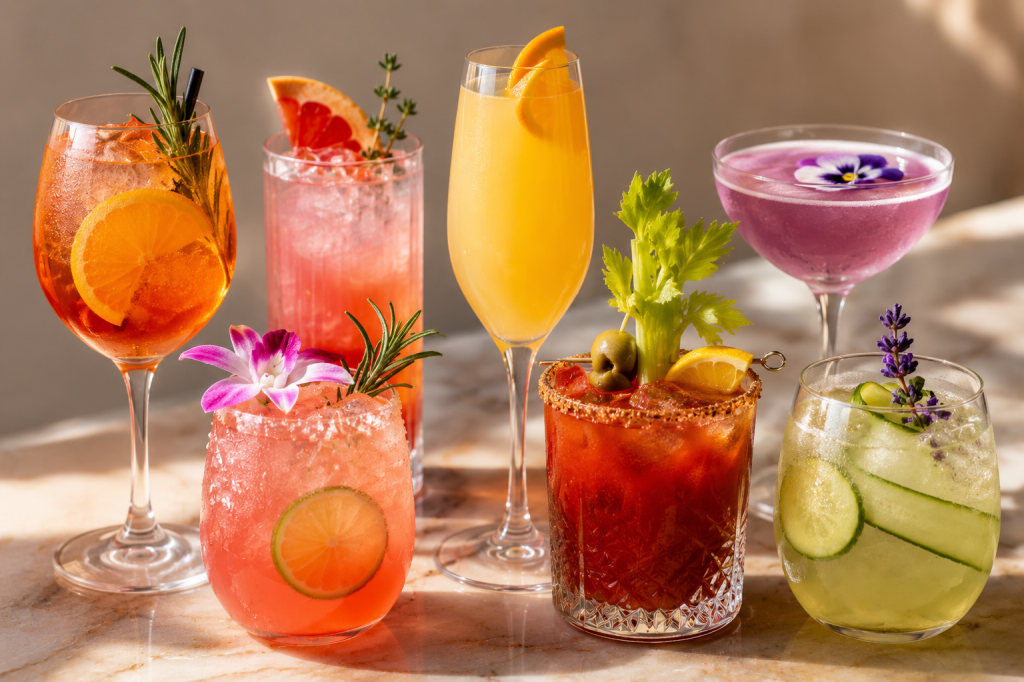
Brunch cocktails occupy a distinct cultural and sensory niche—positioned between indulgence and ritual, between late mornings and slow afternoons. They are not merely drinks; they function as social lubricants, aesthetic statements, and, in many cases, culinary complements. The enduring appeal of the brunch cocktail lies in its balance: lighter than evening libations, often lower in alcohol, and frequently paired with fresh, bright ingredients that align with daytime consumption.
At a structural level, brunch cocktails tend to emphasize acidity, effervescence, and fruit-forward profiles. This makes them accessible and refreshing, particularly when paired with rich or savory brunch dishes. Beyond taste, however, there is a broader experiential dimension. Brunch itself has evolved into a social ritual—urban, leisurely, and often performative. The cocktail becomes part of that “vibe”: visually appealing, easy to sip, and culturally recognisable.
Why are brunch cocktails a staple
The persistence of brunch cocktails across global hospitality scenes can be attributed to several factors. First, they are adaptable. Many classic recipes allow for substitution and variation, making them easy for bars and restaurants to localize. Second, they align with consumer expectations of moderation—day drinking without excess. Third, they are inherently social; pitchers, carafes, and sparkling bases encourage sharing.
From a business perspective, brunch cocktails also offer high margins and strong branding potential. Drinks like the Mimosa or Bloody Mary are not just menu items—they are identifiers of the brunch experience itself.
Four classic brunch cocktails
1. Mimosa
A minimalist composition that relies on quality ingredients and proportion.
Ingredients:
– 75 ml (2.5 oz) fresh orange juice
– 75 ml (2.5 oz) chilled Champagne or sparkling wine
Method:
Pour the orange juice into a flute, then top with sparkling wine. Do not stir aggressively; allow natural integration. Serve immediately.
2. Bloody Mary
Savory, complex, and highly customizable.
Ingredients:
– 45 ml (1.5 oz) vodka
– 90 ml (3 oz) tomato juice
– 15 ml (0.5 oz) fresh lemon juice
– 2–3 dashes Worcestershire sauce
– 2 dashes hot sauce
– Pinch of salt and black pepper
Method:
Combine all ingredients in a shaker with ice. Roll (gently pour between shaker tins) rather than shake vigorously to preserve texture. Strain into a highball glass over fresh ice. Garnish as desired (celery, olives, etc.).
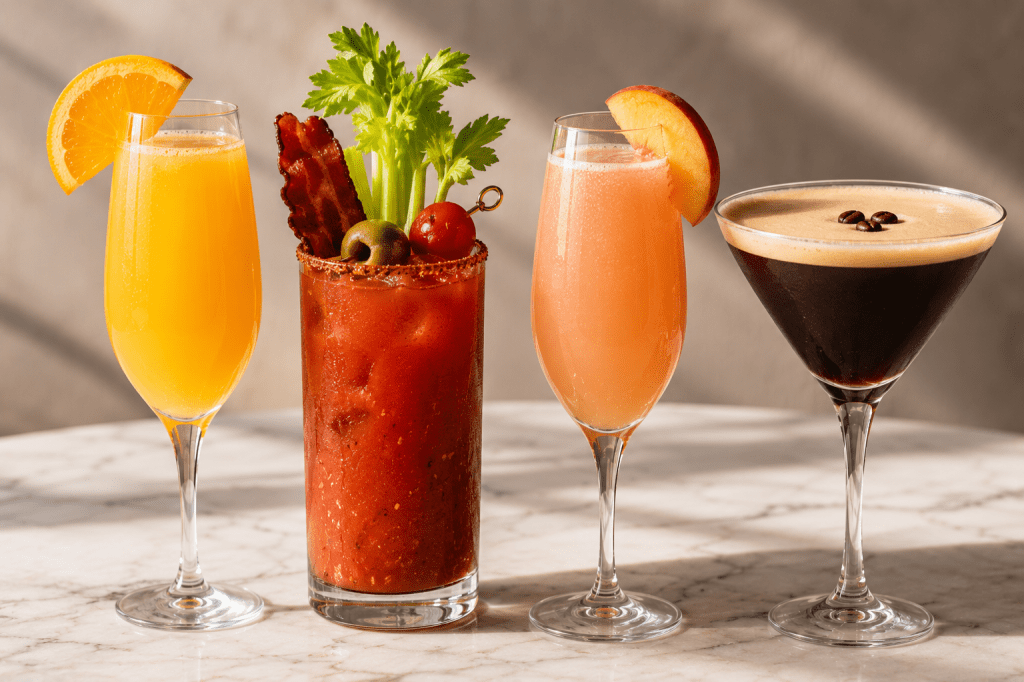
3. Bellini
Elegant and fruit-driven, originating from Venice.
Ingredients:
– 50 ml (1.7 oz) white peach purée
– 100 ml (3.4 oz) Prosecco
Method:
Add peach purée to a chilled flute. Slowly top with Prosecco, allowing it to mix naturally. Serve without stirring.
4. Espresso Martini
A brunch crossover into coffee culture.
Ingredients:
– 40 ml (1.35 oz) vodka
– 20 ml (0.7 oz) coffee liqueur
– 30 ml (1 oz) freshly brewed espresso
– 10 ml (0.35 oz) simple syrup
Method:
Shake all ingredients with ice until well chilled and frothy. Strain into a chilled coupe glass. Garnish with coffee beans.
Innovations in the brunch department
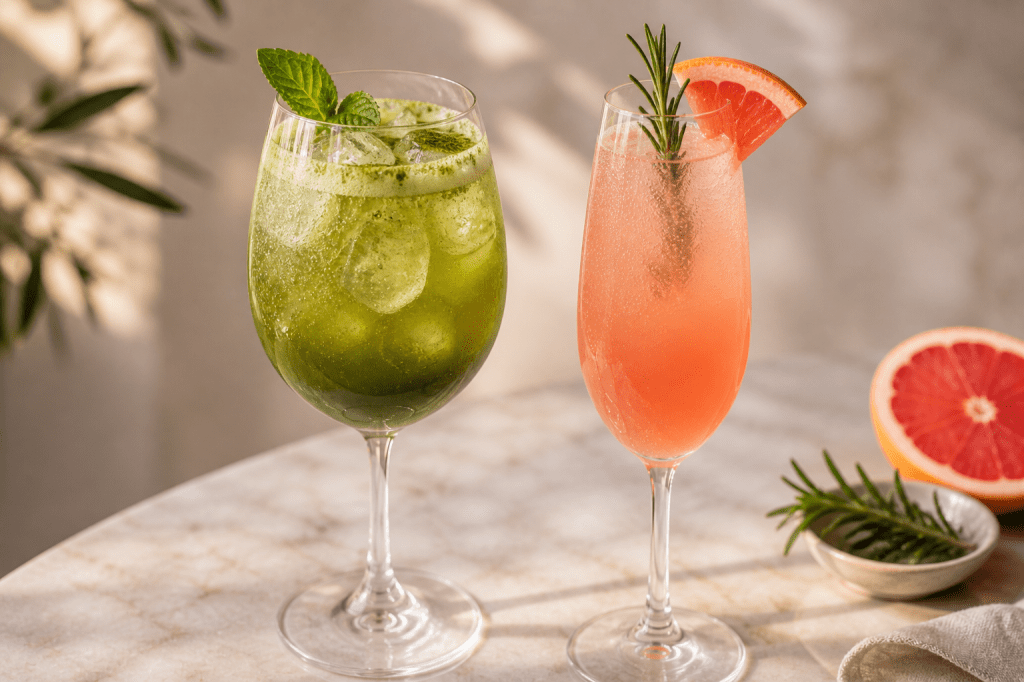
1. Matcha Spritz
A modern, wellness-adjacent adaptation emphasizing earthy bitterness and effervescence.
Ingredients:
– 30 ml (1 oz) matcha concentrate (prepared and cooled)
– 60 ml (2 oz) sparkling wine
– 30 ml (1 oz) soda water
– 10 ml (0.35 oz) honey syrup
Method:
Build in a wine glass over ice. Add matcha and honey syrup, then top with sparkling wine and soda. Stir gently to combine.
2. Grapefruit Rosemary Paloma Mimosa
A hybrid that merges citrus sharpness with herbal complexity.
Ingredients:
– 60 ml (2 oz) fresh grapefruit juice
– 10 ml (0.35 oz) rosemary syrup
– 90 ml (3 oz) sparkling wine
– Splash of soda water
Method:
Combine grapefruit juice and rosemary syrup in a flute or wine glass. Add sparkling wine, then a small splash of soda. Stir lightly. Garnish with a rosemary sprig.
The brunch cocktail persists because it satisfies multiple dimensions simultaneously: taste, aesthetics, social ritual, and cultural signaling. It is structured yet flexible, familiar yet open to reinterpretation. Whether one opts for a canonical Mimosa or an experimental Matcha Spritz, the underlying principle remains consistent—balance, ease, and an atmosphere that encourages lingering. In that sense, the brunch cocktail is less about alcohol and more about context. It is a curated pause in the day, and the drink simply formalizes it.
 Bar and Bites Consulting
Leave a comment