
Every year, absinthe enthusiasts raise a glass to one of the most fascinating spirits ever created. Known as “La Fée Verte” (The green fairy), absinthe has inspired artists, writers, bartenders, and countless myths for more than two centuries. With its distinctive herbal flavor, emerald-green color, and controversial history, absinthe remains one of the most misunderstood spirits in the world.
What is absinthe?
Absinthe is a high-proof distilled spirit flavored primarily with three botanicals often called the “Holy Trinity”:
- Grand Wormwood (Artemisia absinthium)
- Green Anise
- Florence Fennel
Most absinthes contain between 45% and 74% alcohol by volume (ABV), making them significantly stronger than many other spirits. Traditionally, absinthe is diluted with cold water before drinking, which creates the famous “louche effect”—a cloudy, milky appearance caused by essential oils becoming insoluble in water.
The history of Absinthe
Modern absinthe originated in the Swiss region of Neuchâtel during the late 18th century. While the exact inventor remains debated, many historians credit French physician Pierre Ordinaire, who allegedly developed an herbal tonic recipe around 1792. The formula was later commercialized by the Pernod family and became enormously popular throughout France. During the 19th century, absinthe became the drink of choice among artists, poets, and intellectuals. Famous admirers included Ernest Hemingway, Oscar Wilde, Vincent van Gogh, Henri de Toulouse-Lautrec, Paul Verlaine, and Arthur Rimbaud. Parisian cafés filled with patrons enjoying “L’Heure Verte” or “The Green Hour,” typically around 5 p.m. when absinthe was traditionally consumed. By 1910, France was consuming tens of millions of liters of absinthe annually. However, concerns about alcoholism, political pressure from temperance groups, and aggressive campaigns from wine producers led to widespread bans across Europe and the United States. France banned absinthe in 1915, while Switzerland maintained a prohibition for nearly a century.
Modern scientific research has shown that many of the frightening claims about absinthe causing hallucinations were greatly exaggerated. Today, absinthe is legal in most countries and has experienced a significant revival among craft distillers and cocktail enthusiasts.
Lesser known facts about Absinthe
Everyone knows absinthe as “The Green Fairy,” but here are some lesser-known facts that even many enthusiasts don’t know:
1. Not all absinthe Is green
Historically, many premium absinthes were actually clear and known as “Blanche” or “La Bleue.” The green color came from a secondary infusion of herbs rather than artificial coloring.
2. Absinthe was once used as medicine
Before becoming a recreational drink, absinthe was sold as a medicinal tonic believed to aid digestion and combat various ailments. Wormwood itself had medicinal uses dating back to Ancient Egypt and Greece.
3. The cloudy transformation has a scientific name
The famous cloudiness that appears when water is added is called the “louche effect.” It occurs because essential oils from anise and fennel become suspended in water.
4. Spain never fully abandoned Absinthe
While many countries prohibited absinthe, Spain continued producing it legally for decades, helping preserve traditional recipes.
5. Vintage Absinthe changes color over time
Naturally colored absinthe slowly oxidizes and can change from bright green to amber or brown. Collectors often consider this color shift evidence of authentic traditional production.
6. Hemingway created an absinthe cocktail
Ernest Hemingway invented a cocktail called “Death in the Afternoon” combining absinthe and Champagne. The drink remains one of the most famous absinthe cocktails ever created.
Three classic absinthe cocktails
1. Death in the Afternoon
Created by Ernest Hemingway.
Ingredients
- 1 oz (30 ml) Absinthe
- 4–5 oz (120–150 ml) Chilled Champagne
Method
- Pour the absinthe into a Champagne flute.
- Slowly top with chilled Champagne.
- Allow the drink to develop a slight louche.
- Serve immediately.
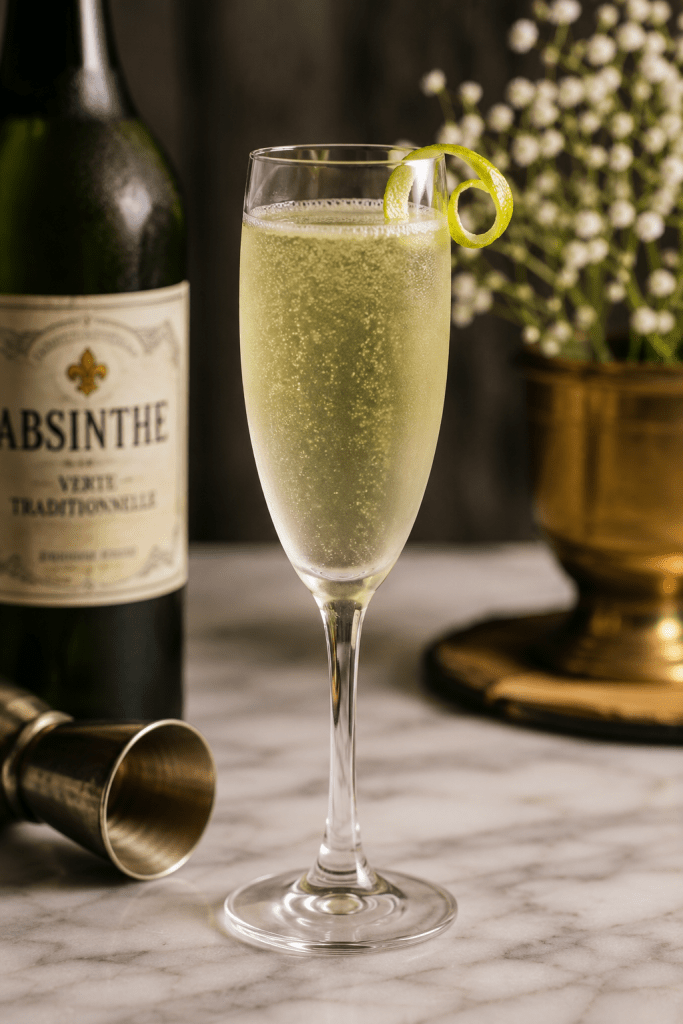
Flavor Profile: Elegant, herbal, sparkling, and surprisingly refreshing.
2. Chrysanthemum
A classic pre-Prohibition cocktail.
Ingredients
- 2 oz (60 ml) Dry Vermouth
- 1 oz (30 ml) Benedictine
- ¼ oz (7.5 ml) Absinthe
Method
- Add all ingredients to a mixing glass filled with ice.
- Stir for 20–30 seconds.
- Strain into a chilled cocktail glass.
- Garnish with an orange twist if desired.
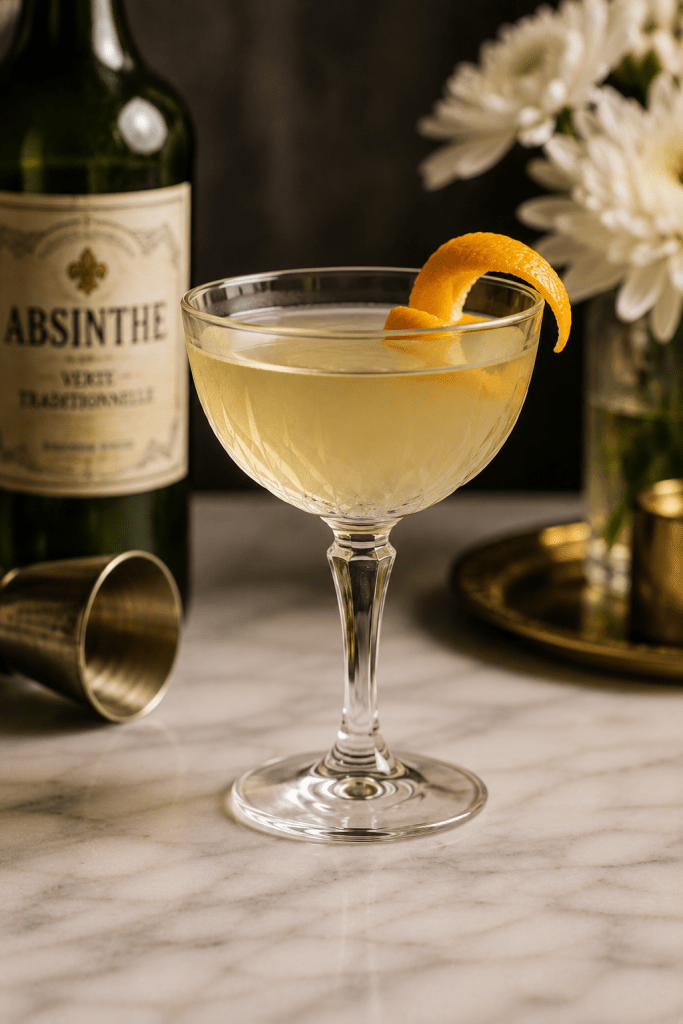
Flavor Profile: Floral, herbal, and lightly sweet.
3. Absinthe Frappé
One of New Orleans’ most famous absinthe drinks.
Ingredients
- 1½ oz (45 ml) Absinthe
- ½ oz (15 ml) Simple Syrup
- 2 oz (60 ml) Cold Water
- Crushed Ice
Method
- Fill a glass with crushed ice.
- Add absinthe, simple syrup, and cold water.
- Stir thoroughly until frosty.
- Top with additional crushed ice.
- Garnish with a mint sprig.
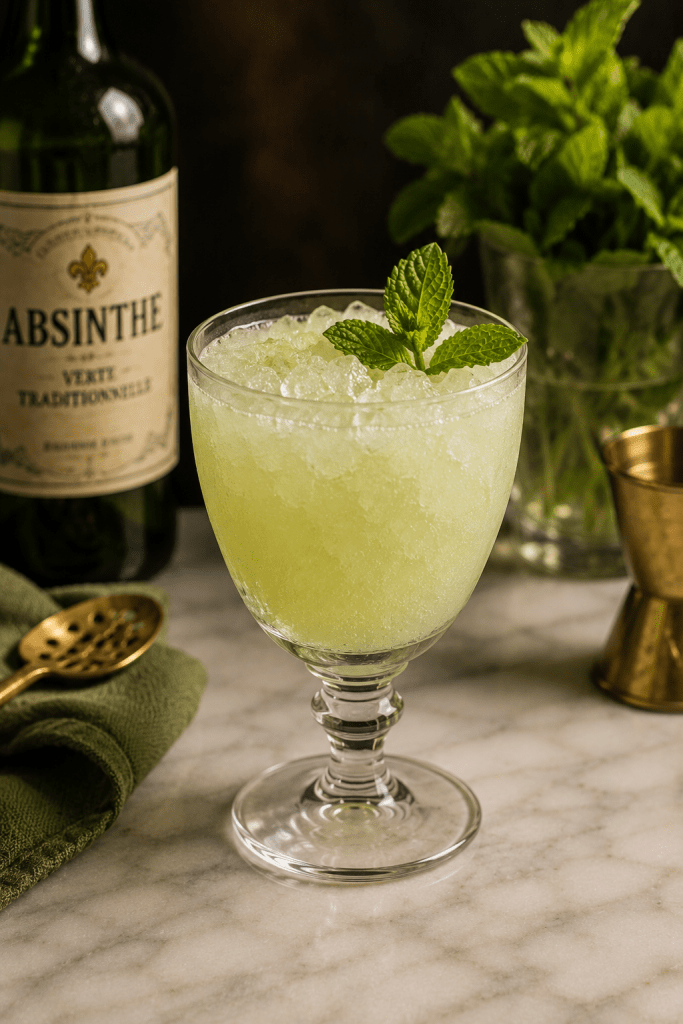
Flavor Profile: Cooling, aromatic, and ideal for warm weather.
A toast to the Green Fairy
Absinthe’s journey from medicinal tonic to artistic muse, from prohibited spirit to modern cocktail staple, is unlike any other in the world of drinks. Despite decades of myths and misunderstandings, the Green Fairy has survived and continues to captivate drinkers with its rich history, complex flavors, and unmistakable ritual. This Absinthe History Day, take a moment to appreciate not only the spirit itself but also the remarkable cultural legacy that has kept absinthe alive for more than 200 years.
Cheers to the Green Fairy.
 Bar and Bites Consulting
Leave a comment