
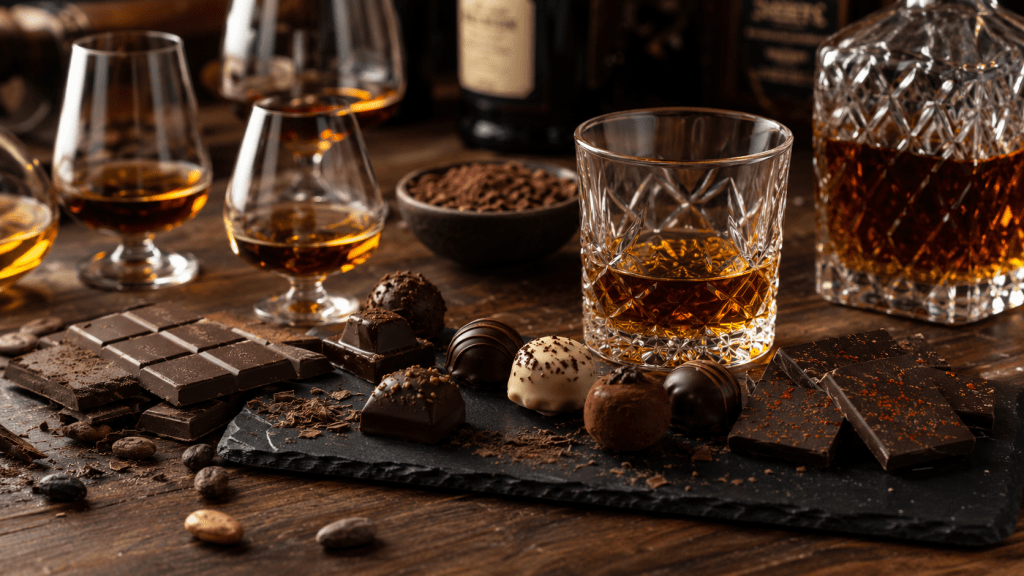
Chocolate & spirits pairing celebrates one of gastronomy’s most luxurious combinations: fine chocolate matched with carefully selected distilled spirits. Much like wine and cheese, the relationship between chocolate and spirits relies on balance, contrast, texture, aroma, and intensity. When paired correctly, both elements enhance one another, revealing layers of flavor that may otherwise remain unnoticed. Chocolate and spirits each carry centuries of tradition, shaped by climate, culture, and artisanal production methods.
What is chocolate?
Chocolate is a food product derived from the seeds of the cacao tree, scientifically known as Theobroma cacao. The name translates from Greek as “food of the gods,” a fitting description for an ingredient that has fascinated civilizations for thousands of years.
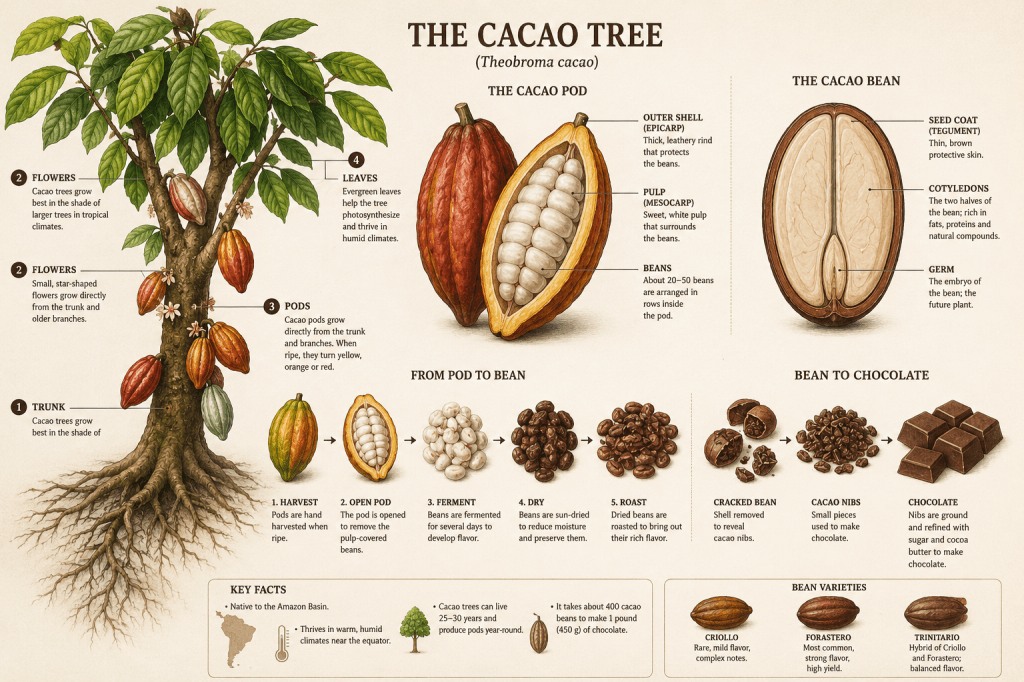
Chocolate begins with cacao beans, which grow inside large pods attached to the trunk and branches of the cacao tree. These trees thrive in tropical climates near the equator, particularly in countries such as Ecuador, Ghana, Ivory Coast, and Brazil.
The cacao bean itself is naturally bitter and complex. Raw cacao contains hundreds of aromatic compounds that contribute fruity, earthy, floral, nutty, and spicy notes. Chocolate as we know it is the result of transforming these beans through fermentation, drying, roasting, grinding, and refining.
How chocolate is made
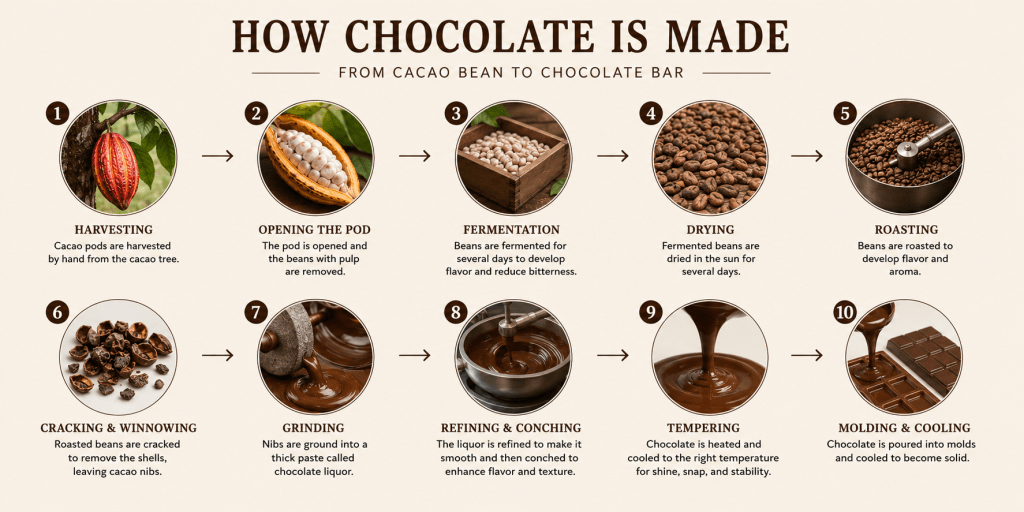
Harvesting the Cacao Pods
Cacao pods are harvested by hand using machetes or specialized knives. Each pod contains approximately 20–50 cacao beans surrounded by sweet white pulp.
Fermentation
After harvesting, the beans and pulp are placed in wooden boxes or covered heaps for several days. Fermentation is one of the most important stages because it develops the flavor precursors that later create chocolate’s characteristic taste. During fermentation, natural yeasts and bacteria break down the pulp sugars, generating heat and chemical reactions inside the beans.
Drying
Once fermented, the beans are spread under the sun to dry. Proper drying prevents mold and stabilizes the beans for transport and storage.
Roasting
Roasting develops aroma, reduces bitterness, and deepens flavor complexity. Different roasting temperatures create different profiles, ranging from fruity and acidic to dark and smoky.
Grinding and Refining
The roasted beans are cracked open to remove the shells, leaving cacao nibs. These nibs are ground into a thick paste called chocolate liquor, which contains both cocoa solids and cocoa butter. Manufacturers then refine the mixture with sugar, milk powder (for milk chocolate), vanilla, or additional cocoa butter.
Conching and Tempering
Conching smooths the texture and enhances flavor by continuously mixing and aerating the chocolate. Tempering carefully controls temperature to stabilize cocoa butter crystals, creating the glossy appearance and satisfying snap associated with high-quality chocolate.
The discovery and history of chocolate
Chocolate has ancient origins dating back more than 3,000 years. The earliest known use of cacao traces to the ancient peoples of Mesoamerica, including the Maya civilization and the Aztec Empire. Unlike modern sweet chocolate, early cacao beverages were bitter, spiced, and often mixed with chili peppers, cornmeal, or herbs.
The Maya considered cacao sacred and used it in ceremonies, trade, and religious rituals. The Aztecs valued cacao beans so highly that they were sometimes used as currency. When Spanish explorers arrived in the Americas during the 16th century, they encountered cacao and brought it back to Europe. Sugar and cinnamon were added to reduce bitterness, transforming chocolate into a luxury drink favored by European aristocracy.
By the 19th century, industrial innovations allowed chocolate to become more accessible. The invention of the cocoa press by Coenraad Johannes van Houten enabled the separation of cocoa butter from cocoa solids, leading to smoother chocolate products. Later developments introduced milk chocolate and molded chocolate bars.
Today, chocolate is consumed globally in countless forms, from artisan single-origin bars to desserts, pastries, beverages, and cocktails.
The art of pairing: Chocolate & Spirits
Pairing chocolate with spirits is based on complementary and contrasting flavor dynamics. The goal is to create harmony between sweetness, bitterness, acidity, texture, alcohol intensity, and aromatic complexity.
Several factors influence successful pairings:
- Cocoa percentage
- Sugar content
- Texture and creaminess
- Roasting profile
- Added ingredients such as fruit, nuts, spices, or caramel
- Alcohol strength and barrel aging
A good pairing allows neither the chocolate nor the spirit to overpower the other.
Dark chocolate and Whiskey
Dark chocolate, especially varieties containing 70% cocoa or more, pairs exceptionally well with whiskey.
Why It Works
Dark chocolate contains roasted, bitter, and earthy notes that complement the oak, vanilla, caramel, and smoke characteristics often found in whiskey.
Peaty Scotch and high-cocoa chocolate work particularly well because both contain deep roasted and smoky flavor compounds.
Recommended Pairings
- Smoky Scotch whisky with intense dark chocolate
- Bourbon with caramel-forward chocolate
- Rye whiskey with spiced chocolate
- Single malt whisky with sea salt dark chocolate
Milk chocolate and Rum
Milk chocolate’s creamy sweetness pairs naturally with aged rum.
Why It Works
Rum often contains notes of vanilla, banana, molasses, brown sugar, and tropical spices. These flavors enhance the creamy profile of milk chocolate without overwhelming it. The smooth texture of milk chocolate softens the warmth of rum, creating a balanced tasting experience.
Recommended Pairings
- Caribbean aged rum with milk chocolate truffles
- Spiced rum with cinnamon chocolate
- Dark rum with caramel-filled chocolate
White chocolate and Vodka
White chocolate differs from dark and milk chocolate because it contains cocoa butter but no cocoa solids.
Why It Works
Its buttery sweetness pairs well with clean spirits like vodka or flavored vodkas that provide fruit or vanilla notes. Because white chocolate is delicate, it works best with lighter spirits rather than heavily oaked or smoky ones.
Recommended Pairings
- Vanilla vodka with white chocolate
- Raspberry vodka with berry-infused white chocolate
- Citrus vodka with white chocolate desserts
Chocolate and Cognac
Cognac is one of the most elegant partners for premium chocolate.
Why It Works
Aged Cognac develops dried fruit, oak, spice, leather, and nutty characteristics. These notes amplify the complexity of fine dark chocolate. The lingering finish of Cognac extends the chocolate tasting experience significantly.
Recommended Pairings
- Bittersweet chocolate with XO Cognac
- Orange-infused chocolate with VSOP Cognac
- Hazelnut pralines with mature Cognac
Chocolate and Tequila
High-quality tequila, especially añejo styles, can pair beautifully with chocolate.
Why It Works
Aged tequila develops vanilla, caramel, and toasted agave notes through barrel maturation. The slight vegetal character of agave creates a sophisticated contrast against chocolate richness.
Recommended Pairings
- Chili dark chocolate with añejo tequila
- Sea salt chocolate with reposado tequila
- Orange dark chocolate with premium tequila
Chocolate Cocktails
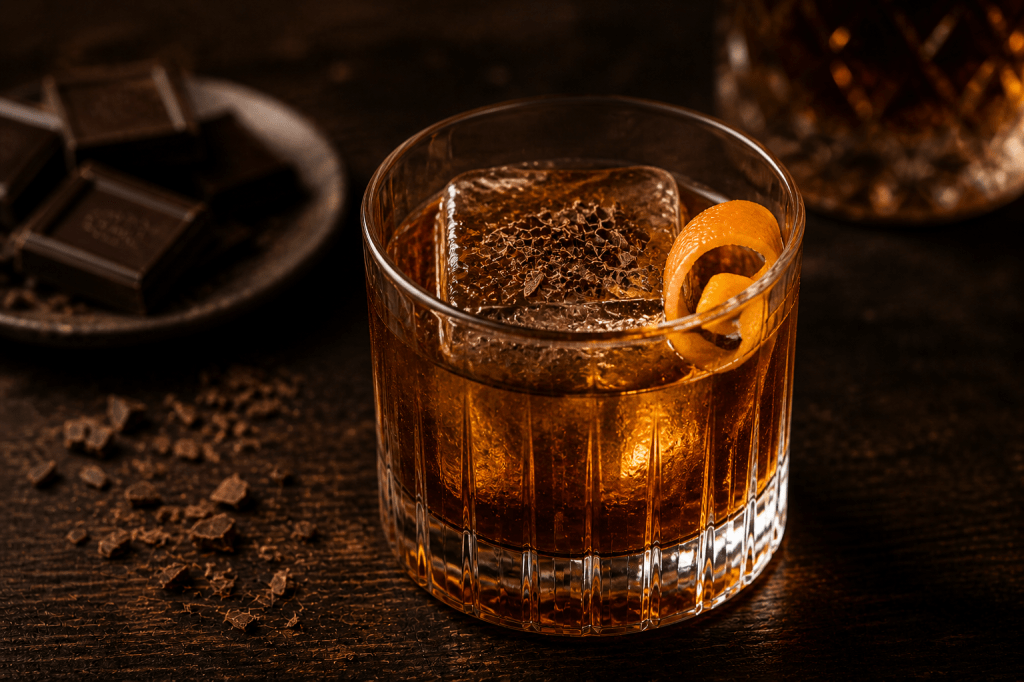
1. Chocolate Old Fashioned
A rich variation of the classic Old Fashioned with cocoa depth and whiskey warmth.
Ingredients
- 60 ml (2 oz) bourbon whiskey
- 15 ml (0.5 oz) crème de cacao
- 5 ml (0.17 oz) simple syrup
- 2 dashes chocolate bitters
- Orange peel garnish
- Dark chocolate shaving garnish
Method
- Add bourbon, crème de cacao, simple syrup, and chocolate bitters into a mixing glass filled with ice.
- Stir thoroughly for approximately 20–30 seconds.
- Strain into a rocks glass over a large ice cube.
- Express the orange peel oils over the drink and place the peel into the glass.
- Garnish with dark chocolate shavings.
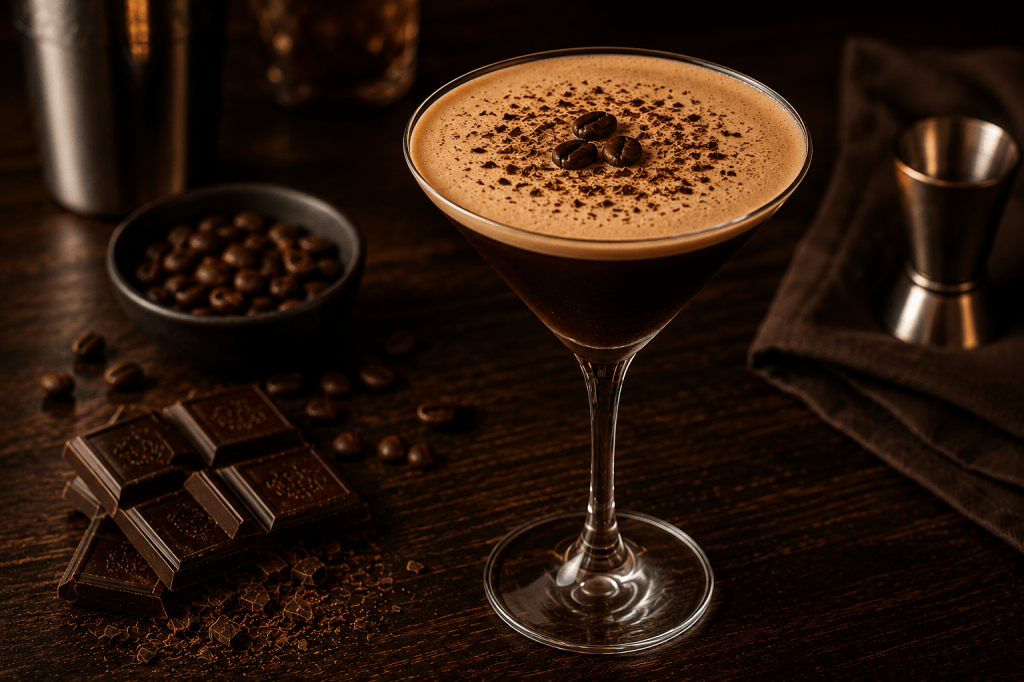
2. Chocolate Espresso Martini
A luxurious cocktail combining coffee, vodka, and chocolate.
Ingredients
- 45 ml (1.5 oz) vodka
- 30 ml (1 oz) coffee liqueur
- 30 ml (1 oz) fresh espresso
- 20 ml (0.67 oz) dark crème de cacao
- 10 ml (0.33 oz) simple syrup
- Cocoa powder or coffee beans for garnish
Method
- Add all ingredients into a cocktail shaker filled with ice.
- Shake vigorously for 15–20 seconds to create foam.
- Double strain into a chilled martini glass.
- Garnish with cocoa powder or three coffee beans.
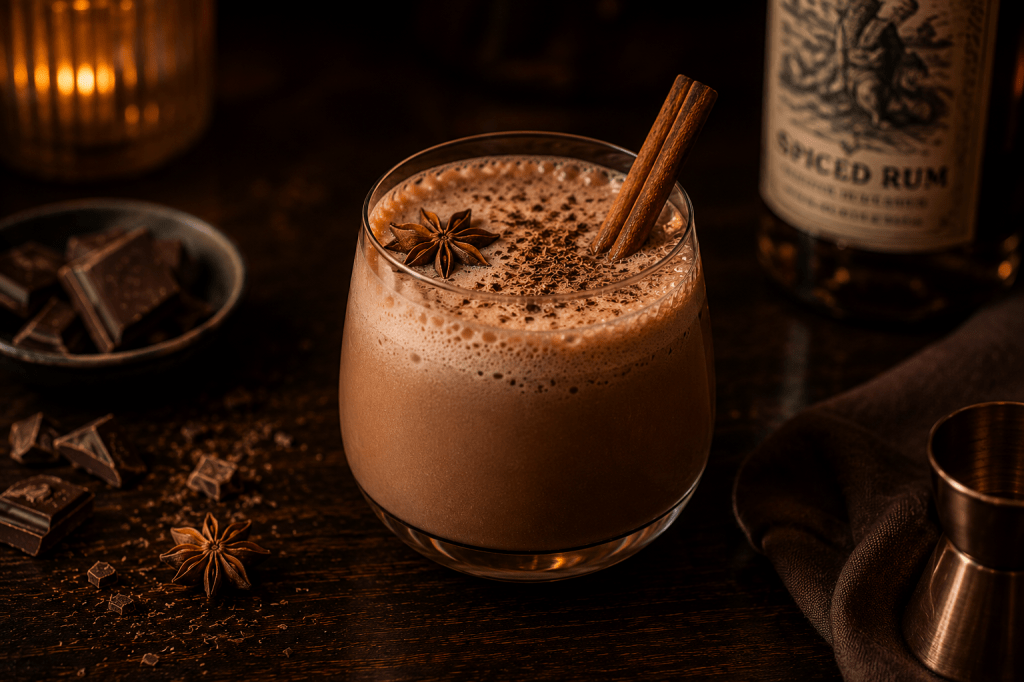
3. Spiced Chocolate Rum Flip
A creamy dessert-style cocktail with warming spice notes.
Ingredients
- 50 ml (1.7 oz) dark aged rum
- 25 ml (0.85 oz) chocolate syrup
- 20 ml (0.67 oz) heavy cream
- 1 whole egg
- 10 ml (0.33 oz) spiced syrup
- Fresh grated nutmeg
- Dark chocolate garnish
Method
- Add all liquid ingredients and the egg into a shaker without ice.
- Dry shake vigorously to emulsify the egg.
- Add ice and shake again until chilled.
- Strain into a coupe glass.
- Garnish with grated nutmeg and dark chocolate.
 Bar and Bites Consulting
Leave a comment