
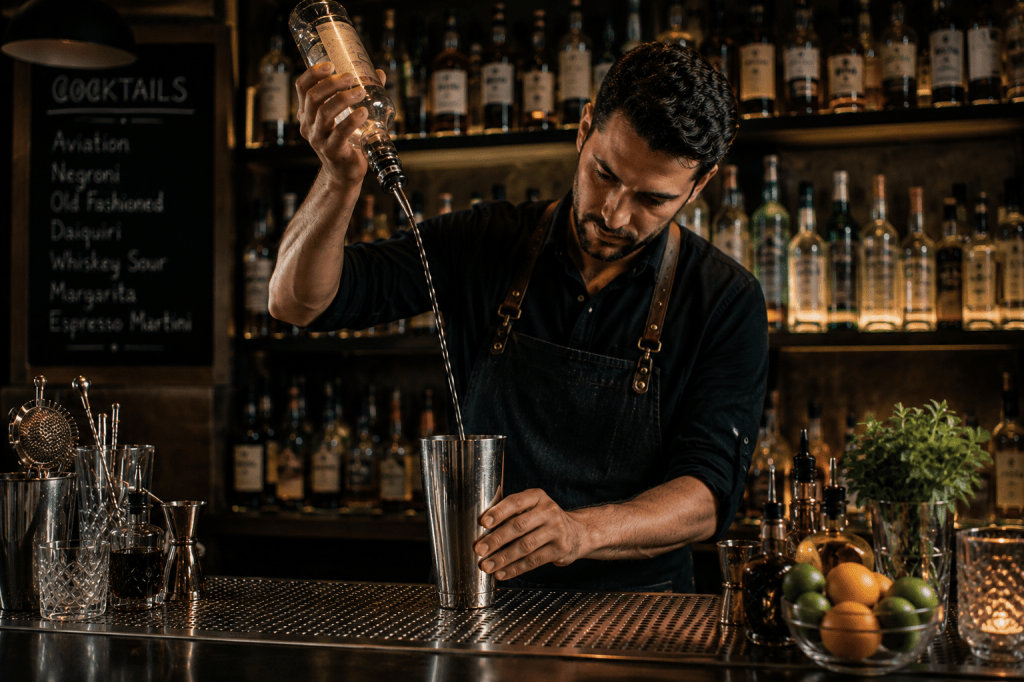
Let’s be real: every bartender worth their salt (rimmed margarita, obviously) has tried free pouring at some point and felt either like Tom Cruise in Cocktail or like they just accidentally funded the owner’s next liquor order with one Long Island iced tea.
So buckle up, grab your jiggers (then dramatically place them aside like you’re entering a martial arts tournament), and let’s dive into the intoxicating world of free pouring — where precision meets pizzazz, where every count matters, and where confidence is half the recipe.
What is free pouring?
Free pouring is the art of measuring alcohol without using a jigger, scale, measuring cup, or one of those laminated corporate manuals that somehow remove all joy from bartending. Instead, bartenders rely on muscle memory, timing, rhythm, and the sacred bartender ability to know exactly when a pour “feels right.”
You’ve seen it before: bottle upside down, smooth wrist motion. tiny head nod, four-count, perfect pour. It looks effortless — which is annoying because it absolutely is not.
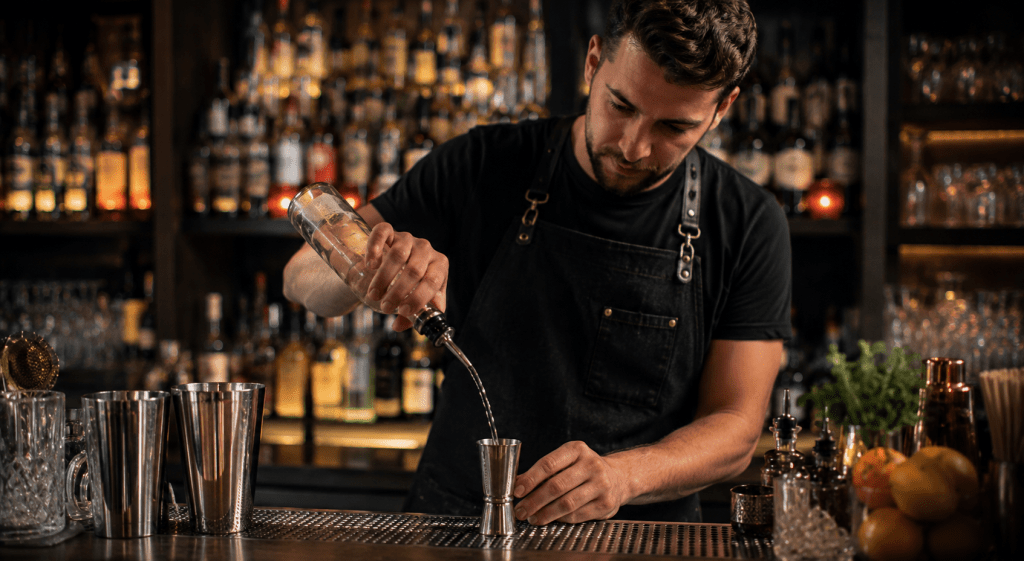
Why Bartenders Love It
There’s a reason free pouring became a cornerstone of bar culture.
First: speed. When the bar is six deep and someone is yelling “two espresso martinis!” like they discovered caffeine yesterday, nobody wants to stop and measure every ounce with laboratory precision.
Second: flow. Free pouring keeps movement smooth and continuous. Great bartenders move like dancers, except sweatier and surrounded by limes.
Third: showmanship. Customers love watching a bartender who looks confident behind the stick. Free pouring adds rhythm and personality to the experience. It says: “I know what I’m doing.” Even if internally you’re thinking:
“Who ordered seven mojitos at once and why do they hate me personally?”
A splash of history
No art form appears overnight. Free pouring evolved through centuries of thirsty chaos.
1. Tavern Days and the Wild West (1800s)
Back in the 1800s, saloons were loud, dusty, and full of people making questionable life choices before refrigeration existed. Bartenders weren’t carefully crafting smoked rosemary old fashioneds with artisanal glacier ice. They were pouring whiskey into glasses as quickly as humanly possible before someone started a chair fight. Measurements were loose at best. In fact, early bartending was often based more on reputation and instinct than exact science. A “shot” could vary wildly depending on the bartender, the city, or how much the customer tipped.
The jigger — named after a small measuring device used by sailors — didn’t become widespread until later. Before that, free pouring wasn’t a skill. It was just… a regular Tuesday.
2. Jerry Thomas: The 0riginal celebrity bartender
Before bartenders had Instagram reels and sleeve tattoos, they had Jerry Thomas. Known as “The Professor,” Jerry Thomas became one of the first famous bartenders in the mid-1800s. He wrote one of the earliest cocktail books, traveled extensively, and turned bartending into performance art. This man lit drinks on fire professionally in the 1860s. Imagine explaining that career path to your parents.
Thomas helped establish the idea that bartending wasn’t just pouring drinks — it was entertainment, hospitality, timing, and style. Modern free pouring and flair bartending owe a lot to his theatrical approach behind the bar.
3. Prohibition and the speakeasy sprint (1920s)
Then came Prohibition in the United States. Alcohol became illegal, which — as history repeatedly proves — only made people want it more. Speakeasies popped up everywhere. Bartenders worked in cramped, hidden bars where speed and discretion mattered. You didn’t have time to carefully measure pours while a jazz band played at full volume and someone whispered, “I think the cops are outside.”
Free pouring became essential because bartenders needed to:
– Serve drinks quickly
– Avoid wasting expensive smuggled liquor
– Work efficiently in chaotic conditions
Pretend bathtub gin was a completely normal thing to consume
4. The tiki boom (1940s–1960s)
Post-war cocktail culture exploded, and suddenly everyone wanted rum drinks with umbrellas, pineapples, and enough ingredients to qualify as soup.
Tiki bartenders became masters of speed and coordination. Drinks often required multiple rums, juices, syrups, and garnishes. Free pouring helped bartenders keep up while still maintaining consistency.
5. Flair bartending and the Hollywood era (1980s)
Then the 1980s arrived wearing sunglasses indoors. Enter Cocktail.
The movie turned bartending into acrobatics overnight. Suddenly everyone wanted to spin bottles, flip tins, and throw liquor through the air with the confidence of someone who had never once paid for broken glassware.
Flair bartending exploded in popularity. Bar managers everywhere developed stress headaches. Still, flair permanently shaped modern bar culture. It reinforced the idea that bartending could be theatrical, stylish, and visually exciting — especially when the bottles actually landed in someone’s hand and not a customer’s lap.
The science behind a good pour
Here’s the thing people don’t realize: Great free pouring is less about “talent” and more about repetition.
A standard speed pour spout creates a relatively predictable flow rate. Most bartenders learn standardized counts:
- 1-count ≈ 1/4 oz
- 4-count ≈ 1 oz
- 6-count ≈ 1.5 oz
- 8-count ≈ 2 oz
But flow rate changes depending on:
- Bottle shape
- Liquid viscosity
- Pour spout type
- Angle of the bottle
- Whether Mercury is in retrograde
- Whether the customer just said “surprise me”
Okay, maybe not the last two. But bartenders will blame them anyway.
This is why elite bartenders practice relentlessly. Tiny differences matter. Overpouring by even half an ounce across hundreds of drinks can cost a bar thousands of dollars annually. That extra “friendly splash” isn’t free.
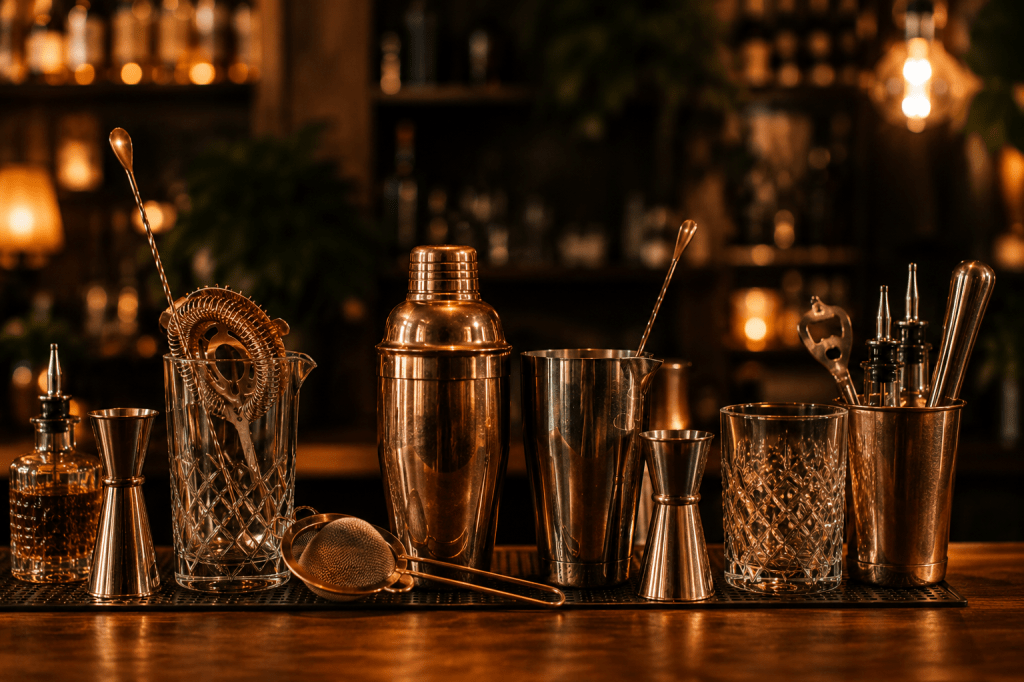
Tips for pouring like a Pro
🍸 1. Practice with water first
Nobody becomes a free pouring legend overnight. Fill empty liquor bottles with water and attach standard speed pourers. Add food coloring if you want to feel fancy. Practice pouring into measuring glasses repeatedly until your counts become automatic.
Your roommates may think you’ve joined some strange liquid cult.
Ignore them.
🧠 2. Develop a consistent count
The key word is consistency.
Some bartenders count:
“one-one-thousand…”
Others use rhythm:
“one-and-two-and…”
Some silently count beats in their head like tiny cocktail metronomes.
The actual counting style matters less than keeping it identical every time.
🥃 3. Watch the bottle angle
A proper pour usually starts with a fast, confident turn of the wrist. Hesitating creates inconsistent flow. Commit to the pour. The bottle can sense fear.
🎯 4. Learn standard cocktail specs
You can’t free pour accurately if you don’t know what you’re aiming for. Knowing recipes instinctively helps your body connect counts with actual drink builds.
🤹 5. Flair comes after fundamentals
Every bartender eventually wants to do the cool behind-the-back pour. And that’s fine. But accuracy comes first. Customers are impressed by consistency far more than watching you accidentally launch a bottle of tequila into a ceiling fan.
📏 6. Do control pours
Even veteran bartenders periodically test themselves using jiggers or scales. Think of it like tuning an instrument. Except the instrument is vodka. If your pours drift, recalibrate your count before bad habits settle in.
🧊 7. Respect different liquids
Not all spirits pour equally. Thick syrups move slower. Cream liqueurs pour differently. Fresh juice behaves differently from straight liquor. And grenadine moves with the determination of cold ketchup. Adjust accordingly.
Common free pouring mistakes
Overconfidence
The fastest way to ruin consistency is assuming you’ve mastered it too early.
Every bartender has had that moment: “I don’t need to measure anymore.”
Counting out loud
Please don’t.
Nothing destroys the illusion faster than hearing:
“ONE… TWO… THREE…” You sound less like a bartender and more like Sesame Street’s least employable vampire.
Ignoring inventory costs
Free pouring isn’t about “hooking people up.” It’s about speed and precision. Consistent overpouring destroys profit margins. Consistent underpouring destroys customer trust. Balance matters.
Practicing during a rush
Do not choose Saturday night at 11:30 PM as your experimental jazz phase. Rush hour is not the time to “see what feels right.”
The psychology of free pouring
There’s actually a fascinating psychological element to free pouring. Customers associate smooth, fluid movements with competence. Watching a bartender free pour confidently creates trust and elevates the experience. It’s part theatre, part craftsmanship. That’s why awkward hesitation behind the bar feels so noticeable. A confident bartender can make a customer excited about a gin and tonic. An unconfident bartender can somehow make a mojito feel medically concerning. Free pouring contributes to rhythm — and rhythm is everything in hospitality.
The philosophy of the pour
At its best, free pouring represents something bigger than just measurement. It’s experience becoming instinct. It’s repetition becoming style. It’s knowing your craft well enough that precision no longer looks mechanical. Also, it’s about surviving a Friday night rush without mentally leaving your body.
But remember:
Free pouring is not about ego. It’s about control.
The best bartenders aren’t the flashiest ones. They’re the ones who can pour accurately, move efficiently, stay calm under pressure, and still somehow remember who ordered the mezcal sour with “just a little less foam.” Those people deserve national holidays.
Pour it like you mean it
Whether you’re a brand-new bartender trying to nail your first six-count or a seasoned industry veteran polishing up your rhythm, free pouring is a skill that rewards patience, discipline, and repetition. You will spill things. You will miscount. You will absolutely pour an accidental monster drink at least once. That’s part of the process. So grab your practice bottles, trust the rhythm, and remember: Accuracy first. Flair second.
And for the love of garnishes, never shake a cocktail while making direct eye contact with another bartender unless you’re prepared for a challenge duel.
Now go forth and pour with purpose. 🍹


Leave a Reply