
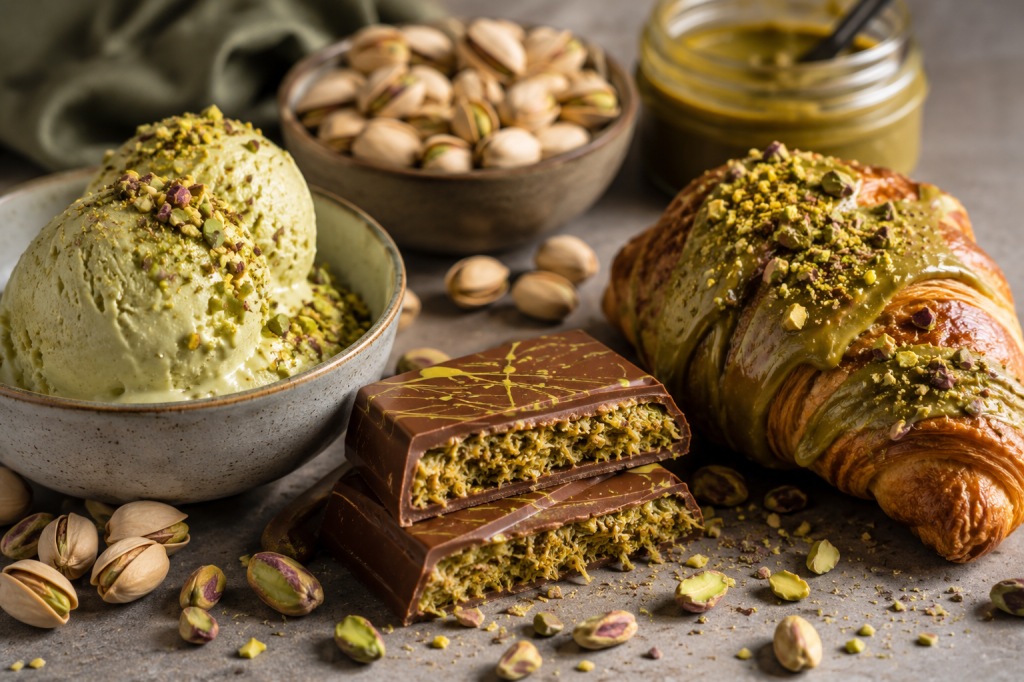
There was a time when pistachio was a niche flavor — associated mostly with old-fashioned ice cream parlors, baklava, or the occasional green macaron. Today, it is everywhere: lattes, croissants, gelato, protein bars, luxury chocolates, nut butters, perfumes, and even cosmetics. In 2025, pistachio has evolved from a regional ingredient into one of the world’s defining premium flavors.
The rise is not accidental. Pistachio sits at the intersection of several modern food trends: indulgence, health-conscious snacking, Middle Eastern cuisine, social media aesthetics, and premium dessert culture.
What pistachio actually is
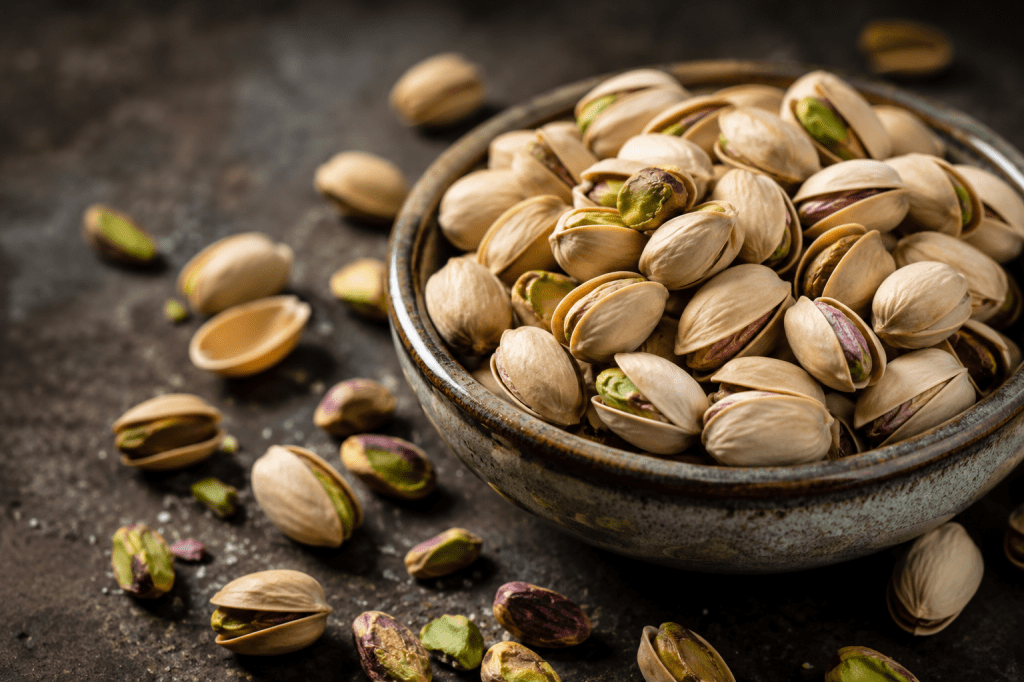
Botanically, pistachio is the seed of the pistachio tree, Pistacia vera, a small tree native to Central Asia and the Middle East. Despite commonly being called a “nut,” it is technically a seed enclosed in a hard shell. Pistachio trees thrive in hot, dry climates with cool winters, which is why production is concentrated in regions such as Iran, Turkey, and California. The trees are unusually resilient and drought-tolerant compared with crops like almonds, making them increasingly attractive in regions affected by water scarcity.
The flavor itself is difficult to categorize precisely. Pistachio combines buttery richness with earthy, roasted, slightly sweet, and faintly floral notes. Unlike more neutral nuts such as almonds or cashews, pistachio has a highly recognizable identity. That distinctiveness is part of its appeal in desserts and beverages.
A flavor with ancient prestige
Pistachios have one of the oldest culinary histories of any cultivated nut. Archaeological evidence suggests they were consumed as early as 7000 BCE in parts of the Middle East.
Ancient Persia treated pistachios as a luxury food associated with wealth and nobility. Trade routes later spread them across the Mediterranean and into Europe. There is even a persistent legend that the Queen of Sheba reserved pistachios exclusively for royalty, banning common citizens from growing them. By the Roman era, pistachios had become prized imports. The ingredient later embedded itself deeply into Turkish, Persian, Levantine, Sicilian, and Greek desserts — traditions that still strongly influence today’s pistachio boom.
Why pistachio became so popular
Several cultural and economic forces converged at the same time.
First, consumers increasingly want “premium comfort” flavors. Pistachio signals luxury in a way vanilla or chocolate no longer does. Its green color, scarcity, and association with artisanal desserts make it feel upscale.\
Second, social media accelerated the trend dramatically. The viral “Dubai chocolate” phenomenon — chocolate bars filled with pistachio cream and crispy kataifi pastry — created an international pistachio frenzy on TikTok and Instagram. Demand became so intense that global pistachio supplies tightened and prices surged.
Third, pistachio fits modern wellness narratives surprisingly well. It is rich in protein, fiber, healthy fats, antioxidants, and minerals. Consumers increasingly view pistachio-based desserts as more “natural” or nutritionally balanced than heavily processed sweets.
Finally, pistachio is highly versatile. It works in both luxury pastry and mainstream retail products:
– pistachio milk
– pistachio cream spread
– gelato
– bakery fillings
– flavored coffees
– protein snacks
– confectionery
– savory sauces
This versatility has made pistachio commercially attractive across multiple industries.
The global pistachio boom
The pistachio market has expanded rapidly in recent years, driven by demand for healthy snacks and premium flavored products. Several market analyses project continued strong growth throughout the next decade.
The United States, Iran, and Turkey dominate production globally. California alone has transformed the U.S. into the world’s largest pistachio exporter, surpassing Iran over the past decade. Interestingly, pistachios are also benefiting from climate realities. Farmers in California increasingly favor pistachios over almonds because pistachio trees require less water and tolerate drought conditions more effectively.
Where pistachios are consumed the most
Consumption patterns reveal an important cultural story.
Turkey is currently among the world’s largest pistachio consumers, with extraordinarily deep culinary integration into desserts and pastries.
Iran, China, the United States, and the European Union are also major consumption markets. Together, the U.S., Turkey, China, and the EU account for roughly 72% of global pistachio consumption.
China has become especially important because pistachios are viewed there as both a premium snack and a gifting product. Chinese annual demand reached approximately 160,000 metric tons in 2024.
Meanwhile, Europe’s appetite for pistachio continues to expand, particularly in pastry, gelato, and confectionery categories.
Pistachio as a cultural symbol
What makes pistachio particularly fascinating is that it transcends food categories. It has become an aesthetic.
The pale green color is now associated with sophistication and Mediterranean luxury. Fashion, interior design, and cosmetics increasingly borrow “pistachio green” palettes. At the same time, cafés and bakeries use pistachio to communicate craftsmanship and exclusivity.
In many ways, pistachio occupies the same cultural space that salted caramel did a decade ago: familiar enough to be comforting, but distinctive enough to feel elevated.
Is pistachio just a trend?
Probably not…but you never know 🙂
Unlike many viral food crazes, pistachio has structural advantages:
– strong agricultural investment
– centuries of culinary heritage
– broad international appeal
– compatibility with health trends
– adaptability across product categories
The current social-media-driven surge may eventually cool, but pistachio itself appears positioned to remain a major global flavor for years.
 Bar and Bites Consulting
Leave a comment