
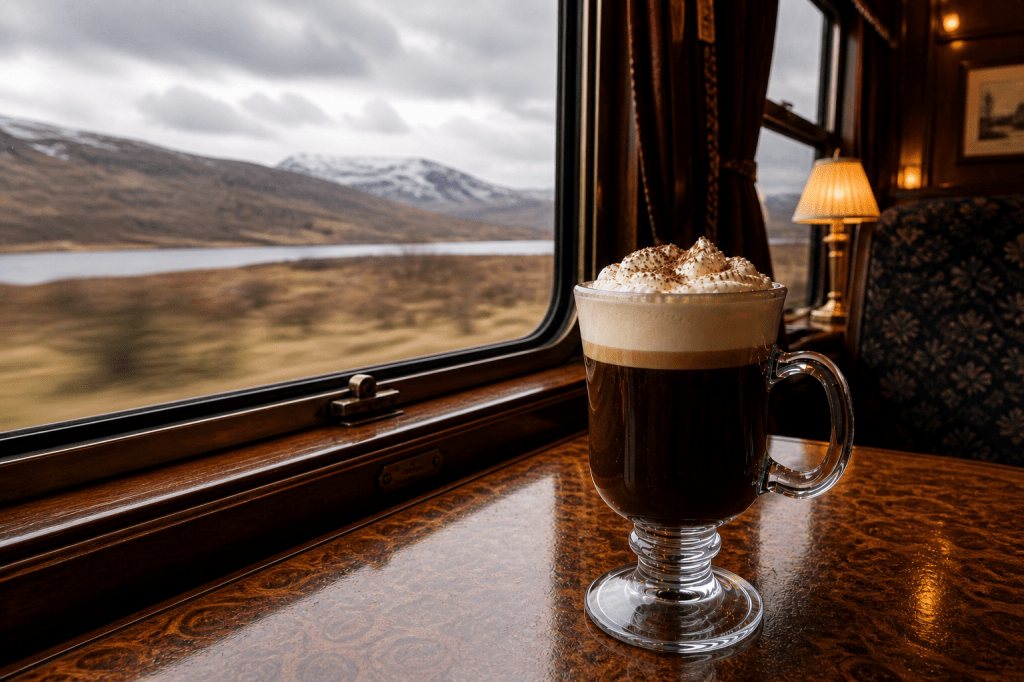
There are two types of people in this world: those who wake up bright-eyed, ready to greet the day… and those who require a carefully engineered cocktail just to achieve basic human functionality. This article is for the latter—and for bartenders who have, at some point, been asked, “Can you make it stronger?” before noon.
Enter Irish coffee: the diplomatic solution to the age-old conflict between “I need caffeine” and “I need a drink.”
A brief origin story
Irish coffee wasn’t invented because someone thought, “What if breakfast fought back?” It actually dates back to the 1940s, when a chef named Joe Sheridan decided that cold, tired passengers needed something warming, comforting, and mildly irresponsible. Coffee alone? Not enough. Whiskey alone? Too honest. Together? Genius.
As a bartender, you should appreciate this: Irish coffee is one of the earliest examples of what we now call “functional drinking.” It serves a purpose. That purpose is morale.
The body of Irish Coffee
At first glance, Irish coffee looks simple. And technically, it is. But it contains layers.
- Hot coffee – The backbone. Ideally strong, because weak coffee in a cocktail is just sad bean water.
- Irish whiskey – Smooth, approachable, and just assertive enough to remind you this isn’t a café order.
- Sugar – Traditionally brown sugar, because we like depth and a hint of sophistication.
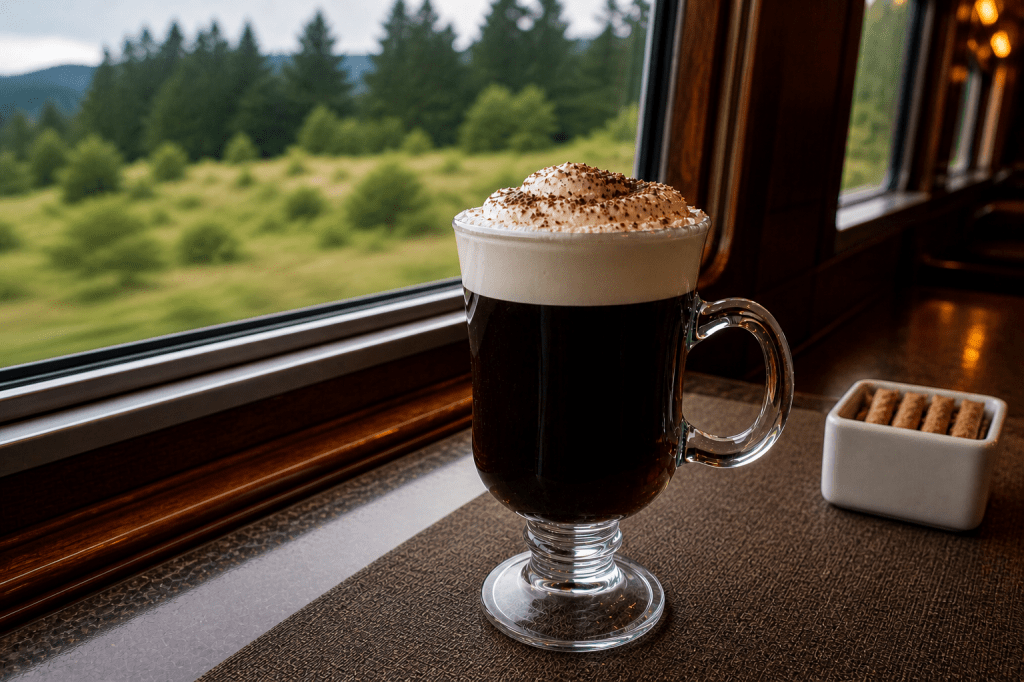
- Lightly whipped cream – Floating on top like it has no responsibilities whatsoever.
Here’s where bartenders earn their keep: balance. Too much whiskey, and it’s a cry for help. Too much sugar, and you’re serving dessert in denial. The cream? It should sit gently on top—not sink, not blob, not become a dairy catastrophe.
Technique: Where things go slightly wrong
Making Irish coffee is less about mixing and more about respect—for temperature, layering, and gravity.
First, warm your glass. Skip this step and congratulations, you’ve invented lukewarm disappointment. Then build your drink: sugar and whiskey go in first, followed by hot coffee. Stir until dissolved.
Now comes the signature move: floating the cream. This is the bartender equivalent of a mic drop—except if you mess it up, everyone sees it. Pour it slowly over the back of a spoon. If it sinks, don’t panic. Just call it “rustic” and move on.
Common bartender mistakes
Using bad coffee – If your coffee tastes like regret, your cocktail will too.
Over-whipping the cream – You’re not frosting a cake. This isn’t a cupcake emergency.
Skipping the balance – Irish coffee is not a free-pour whiskey showcase.
Serving it cold – This is a hot drink. If it’s cold, you’ve made a very confusing dessert.
The customer factor
Ordering Irish coffee reveals a lot about a person. Some want comfort. Some want nostalgia. Some just discovered it exists and are now committed to it as a personality trait.
As a bartender, you’ll get variations:
- “Can you make it stronger?” (Yes, but we’re entering brunch chaos territory.)
- “Can I have it iced?” (You can, but now we’re in philosophical disagreement.)
- “Can I get it with almond milk?” (You may need a moment.)
Handle these with grace. Or at least with a straight face.
Why Irish Coffee still matters
In a world of smoked cocktails, foams, and drinks served inside objects that should not hold liquids, Irish coffee remains refreshingly honest. It’s warm, simple, and doesn’t require a backstory involving foraged moss or a three-day infusion.
It’s also one of the few cocktails that comfortably lives in both a bar and a breakfast setting—which is either very versatile or mildly concerning.
Our closing
Irish coffee is proof that bartending doesn’t always need to be complicated to be effective. Sometimes, it’s just about giving people exactly what they didn’t know they needed: caffeine, whiskey, and a brief suspension of responsibility.
So the next time someone orders one, take it seriously. Warm the glass. Balance the ingredients. Float that cream like you mean it.
And remember: you’re not just making a drink—you’re helping someone negotiate with their morning.


Leave a Reply