
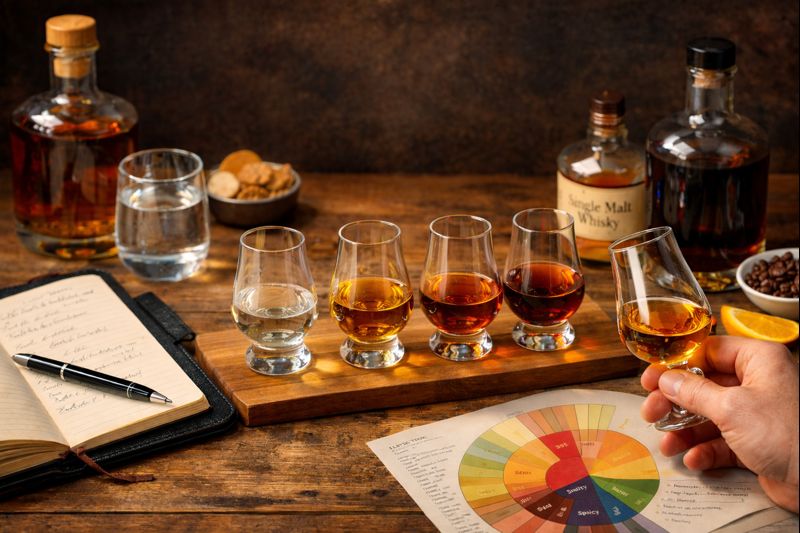
If you’ve ever watched someone swirl a glass of whiskey like it holds the secrets of the universe and thought, “How do I do that without faking it?”—you’re not alone. Tasting spirits is not about showing off or being pretentious. It’s about developing your senses, appreciating craftsmanship, and maybe throwing around a few tasting notes to impress your friends (or customers). This guide walks you through how to taste and describe spirits with confidence, curiosity, and a bit of flair.
1. Create the Right Environment
Start by setting yourself up for success. A neutral, clean setting is key: no strong smells (looking at you, scented candles), no spicy meals right before, and definitely no loud background music if you’re really trying to focus. Your palate and nose should be as distraction-free as possible. Fresh air and a glass of water nearby are your best tasting companions.
2. Choose the Right Glassware
Don’t underestimate the glass. For nosing and tasting, tulip-shaped glasses (like a Glencairn or Copita) are ideal because they funnel aromas toward your nose. Wide-brimmed rocks glasses are better for casual drinking but not great for a proper tasting. The goal is to contain and direct the aromas, not let them escape like spirits into the ether.
3. Observe the Spirit’s Appearance
Before even smelling it, take a good look. Hold the glass up to natural light or a white background. Observe the clarity, color, and viscosity. Is it pale gold, deep amber, crystal clear, or hazy? These visual cues tell you about age, cask type, and whether additives or filtration were used. Swirl the glass and watch the legs (those streaks dripping down)—slow, thick legs often mean higher alcohol or sugar content.
4. Swirl Gently, Like You Care
Swirling isn’t just for show—it aerates the spirit and helps release volatile aromas. Just don’t go tornado-mode like you’re holding a glass of Merlot at a vineyard wedding. A subtle swirl will do. Think of it as coaxing the spirit out of its shell rather than spinning it into submission.
5. Nose It in Layers
Now, bring the glass to your nose, but not too close. Tilt it slightly and take gentle sniffs with your mouth slightly open to help balance the alcohol vapors. Don’t inhale too hard or you’ll burn your nostrils and hate yourself briefly. Try “layered nosing”: start at the rim, then get deeper, noting how the aromas evolve. Look for categories—fruity, floral, woody, spicy, earthy, smoky.
6. Prime Your Palate
Take a tiny sip—just a few drops—and let it roll around your tongue. This first taste is your palate’s warm-up act. It might seem sharp or overwhelming at first, especially with high-proof spirits. Don’t judge just yet. Like meeting someone at a party, first impressions aren’t always accurate. Give it a moment.
7. Taste With Intention
Now take a proper sip and hold it in your mouth for a few seconds. Let it touch all areas of your tongue. Start identifying the flavors and how they evolve. Spirits often change from entry to mid-palate to finish. Are you tasting vanilla, caramel, black pepper, licorice, citrus, or smoke? Describe the intensity, balance, and progression.
8. Understand the Flavor Profile
Every spirit has a flavor profile. Bourbon tends toward sweet, spicy, and oaky. Mezcal leans smoky and vegetal. Gin offers botanicals galore, while rum spans from grassy to molasses-rich. Understanding each spirit category helps you tune into what you should be tasting, so you can better spot exceptional examples—or weird outliers.
9. Mind the Mouthfeel
Mouthfeel describes the texture: Is it oily, creamy, silky, sharp, dry, or even a little chalky? High-end spirits often have a luxurious, rounded texture. This comes from aging, distillation quality, or sugar content. A velvety mouthfeel in a well-aged rum or cognac can be as satisfying as the flavors themselves.
10. Note the Finish
A good finish is like a movie with a satisfying ending—it leaves a lasting impression. Does the flavor linger pleasantly, or vanish like a ghost in the fog? Is it warming, spicy, nutty, or dry? Long finishes are often a hallmark of quality, especially in aged spirits like Scotch or tequila añejo. Take your time with this part—it’s where the magic often lives.
11. Describe What You Taste (No Filter Needed)
Now comes the fun (and sometimes weird) part: putting it into words. Don’t be afraid to get descriptive—even poetic. “Like banana bread baked in a leather-bound book” might sound silly, but it paints a clear picture. Flavor is memory-based, so trust your impressions, even if they don’t match someone else’s.
12. Use a Flavor Wheel or Tasting Guide
If you’re feeling stuck, grab a spirit-specific flavor wheel (many exist for whiskey, rum, gin, etc.). These tools help train your brain to associate certain tastes with recognizable terms. Think of it as training wheels for your palate—it’s not cheating; it’s leveling up.
13. Compare and Contrast
Tasting multiple spirits side by side is an excellent way to sharpen your skills. Try comparing different styles—like a bourbon versus a rye, or a gin with citrus botanicals versus one with heavy juniper. You’ll start noticing subtle differences you might otherwise miss. It’s like learning to tell twins apart once you spend enough time with them.
14. Keep a Tasting Journal
Write down your observations—appearance, nose, taste, mouthfeel, finish, and overall impressions. Include brand, ABV, age, cask type, and even the setting in which you tasted. Over time, your notes will help you recognize what you love, what you don’t, and what trends are developing in your preferences.
15. Avoid Common Pitfalls
Don’t taste when you’re sick, stuffed, or already tipsy. Avoid smoking, chewing gum, or wearing heavy perfume before a tasting. Also, don’t chug the sample—it’s a tasting, not a race. One ounce sipped slowly will reveal more than three ounces knocked back in 30 seconds.
16. Taste Across Categories
Don’t just focus on whiskey or rum—try a variety of spirits: mezcal, aquavit, pisco, grappa, genever. Each has its own unique profile and production story. You’ll develop a broader palate and deeper appreciation for global distillation traditions (and maybe find a new favorite along the way).
17. Learn the Lingo—but Don’t Be a Snob
It’s cool to know what “tertiary notes” and “non-chill filtered” mean, but remember: nobody likes a show-off. Use technical terms to enhance understanding, not to gatekeep. If you’re teaching others or leading tastings, focus on being inclusive and engaging, not intimidating.
18. Ask Questions, Stay Curious
Even seasoned pros learn new things all the time. Don’t be afraid to ask distillers, bartenders, or spirit reps about production methods, aging processes, or flavor choices. Curiosity keeps the experience fresh. Spirits are full of stories—seek them out.
19. Tasting Is Not the Same as Drinking
Remember: you’re tasting, not getting buzzed. Small sips, lots of water, and pacing are essential—especially during flights or comparative tastings. Staying clear-headed helps you perceive subtleties and take useful notes. Save the party for later.
20. Make It Fun and Personal
At the end of the day, tasting spirits should be enjoyable. Whether you’re doing it alone at your home bar or hosting a full-blown tasting night with friends, keep it light and engaging. You’re exploring culture, history, craftsmanship, and flavor—all in one glass. Don’t stress about “doing it right.” Trust your senses, describe what you experience, and have fun with it.
 Bar and Bites Consulting
Leave a comment