
Comfort Food Day invites us to slow down and acknowledge something deeply human: our emotional relationship with food. Long before meals were photographed, rated, or optimized, they were shared. They were cooked patiently, eaten repeatedly, and remembered long after the plates were cleared. Comfort food exists at this intersection of memory, nourishment, and feeling. It is food that does not ask us to perform or impress, only to receive.
Comfort food is rarely glamorous. It is often beige, soft, warm, and familiar. Its value lies not in novelty but in reliability. These are dishes that show up in moments of vulnerability—after long days, during illness, in quiet evenings, and at family tables that feel safe. Across cultures, comfort food plays the same role: grounding us when life feels uncertain.
Historically, comfort food tends to emerge from necessity. Many beloved dishes were born during periods of economic hardship, migration, or recovery. Over time, what once sustained people physically began to sustain them emotionally as well. Comfort Food Day is a way to honor those histories and the simple meals that carried people through difficult seasons.
Below are five widely recognized comfort foods, explored not only as dishes, but as emotional artifacts shaped by history.
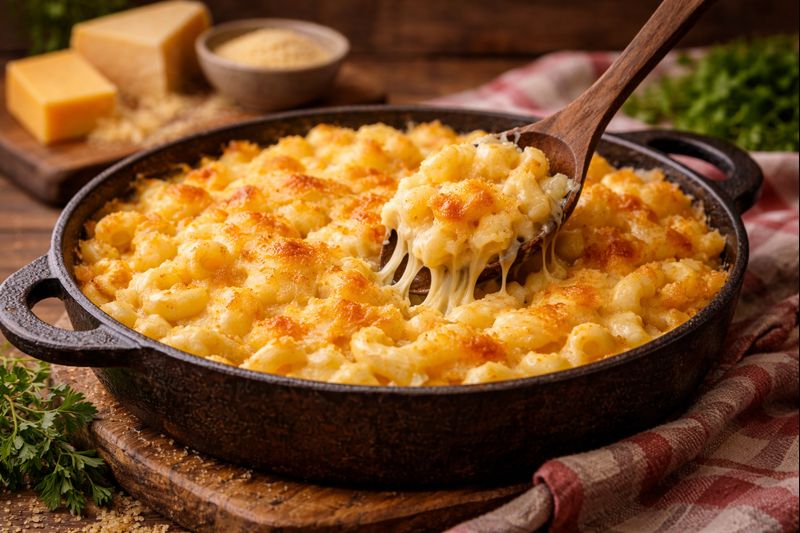
Mac and Cheese
Macaroni and cheese feels inseparable from childhood for many people, but its story begins centuries earlier. Early versions of pasta with cheese appeared in European recipes well before it became an everyday meal. When it reached American households, it gradually shifted from a novelty to a dependable staple.
In the 20th century, especially during times when budgets were tight, mac and cheese became a practical solution. It was affordable, filling, and could feed families with minimal ingredients. Over generations, it embedded itself into weekly routines and childhood memories.
Historical notes:
- Pasta and cheese combinations date back to medieval Europe.
- It gained popularity as an economical household meal.
- It became associated with childhood because of its mild flavor and soft texture.
- Its consistency and richness create a sense of indulgence even in simple settings.
Emotionally, mac and cheese represents care without complication. It is often one of the first meals people learn to make for themselves, reinforcing independence while still feeling safe.
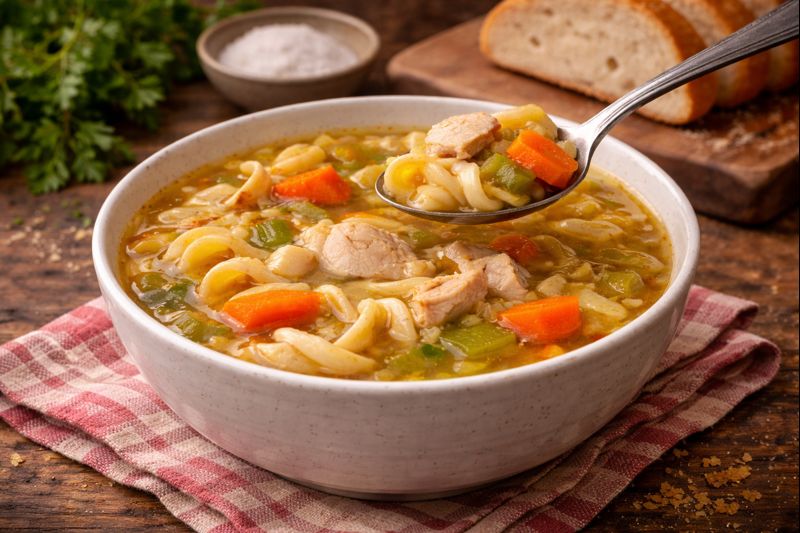
Chicken Noodle Soup
Chicken noodle soup occupies a unique space between food and remedy. Across cultures, variations of chicken broth have been used for centuries as a restorative dish. It was commonly prepared for the sick, the elderly, and the exhausted.
As households passed down recipes, the soup became associated with being cared for. Someone made time to simmer it. Someone wanted you to feel better. That emotional context is inseparable from the dish itself.
Historical notes:
- Chicken broth has been used medicinally since ancient times.
- It became a household standard due to its simplicity and nutritional value.
- It is deeply tied to caregiving traditions.
- Scientific studies have even explored its soothing effects.
Chicken noodle soup comforts not because it is exciting, but because it is patient. It asks nothing of the person eating it except to rest.
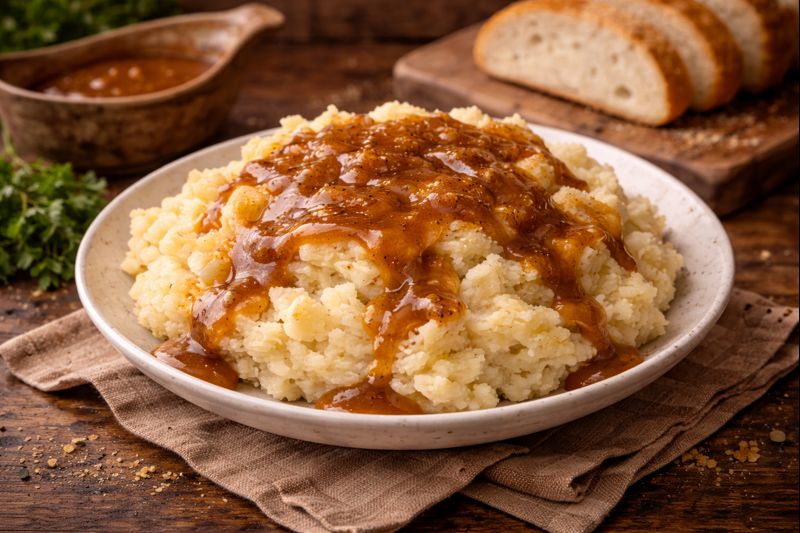
Mashed Potatoes with Gravy
Mashed potatoes are rooted in agricultural survival. Potatoes became essential in many regions because they were affordable, easy to grow, and sustaining. When mashed, they transformed into something softer, warmer, and more comforting.
Gravy, often made from meat drippings, added richness and made use of every available resource. Together, they formed a dish that symbolized fullness and warmth, especially during colder months or communal meals.
Historical notes:
- Potatoes became dietary staples in Europe due to accessibility.
- Mashing made them easier to digest and share.
- Gravy originated as a way to avoid waste.
- The dish became central to family and holiday meals.
Mashed potatoes with gravy are deeply tied to gatherings. They are rarely eaten alone, and their presence often signals togetherness.
Chocolate Chip Cookies
Unlike many comfort foods born of necessity, chocolate chip cookies emerged as a treat. Their history is shorter, but their emotional impact is immediate. The act of baking cookies became synonymous with care, welcome, and celebration.
The smell of cookies baking has a powerful psychological effect. It signals safety, warmth, and reward. For many, it is one of the strongest food-related memory triggers.
Historical notes:
- The recipe originated in the early 20th century.
- Home baking increased its emotional significance.
- Cookies became associated with childhood rewards.
- Sharing baked goods reinforced social bonds.
Chocolate chip cookies comfort us by reminding us that joy does not need justification.

Comfort Food Day is not about overeating or indulgence for its own sake. It is about acknowledgment. These foods carry stories of care, survival, repetition, and memory. They remind us that comfort does not have to be extravagant to be meaningful.
To celebrate Comfort Food Day is to honor the meals that stayed with us, the hands that prepared them, and the quiet moments when food helped us feel steady again. In a world that changes constantly, comfort food remains a gentle constant—warm, familiar, and waiting.
 Bar and Bites Consulting
Leave a comment