
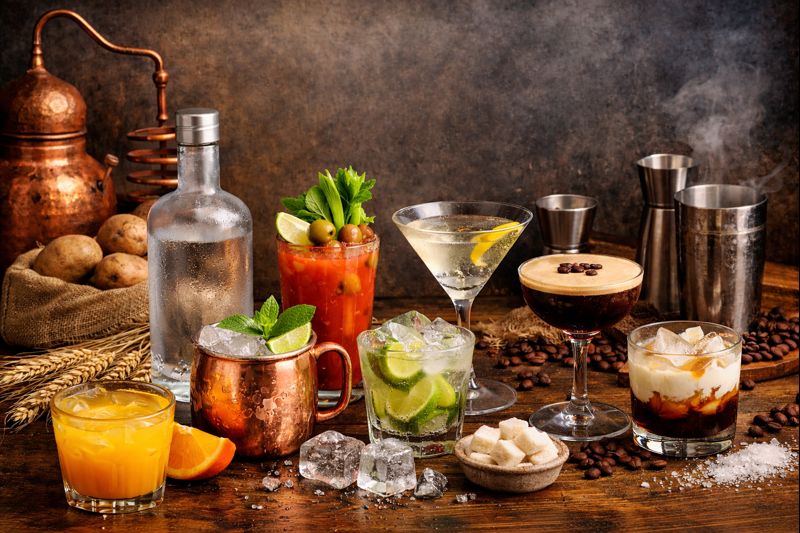
Classic Vodka Cocktail Day is an opportunity to examine how a once-regional spirit became a global foundation for some of the world’s most recognizable drinks. Vodka’s defining traits—neutral aroma, clean palate, and adaptability—have made it both ubiquitous and controversial, yet undeniably central to modern cocktail culture. This article explores the historical development of vodka, explains how it is produced, and presents five classic vodka cocktails from around the world, each with precise measurements and preparation methods.
A brief history of vodka and vodka cocktails
Vodka’s origins are generally traced to Eastern Europe, primarily present-day Poland and Russia, with written references dating back to the 8th–9th centuries. Early vodka was medicinal rather than recreational, used in tinctures and herbal remedies. By the 14th century, distillation techniques improved, and vodka began to be consumed socially, often unaged and unflavored.
The spread of vodka beyond Eastern Europe accelerated in the late 19th and early 20th centuries with advances in column distillation, which produced a cleaner, more neutral spirit. After World War II, vodka entered Western Europe and the United States in earnest. Clever marketing positioned vodka as modern, versatile, and free from the strong aromas associated with whiskey or gin. This neutrality allowed bartenders to build cocktails where other ingredients could shine, leading to the creation and popularization of vodka-based classics that are still dominant today.
How vodka is made
Vodka is defined less by raw material and more by its production goals: neutrality, purity, and smoothness.
- Raw materials
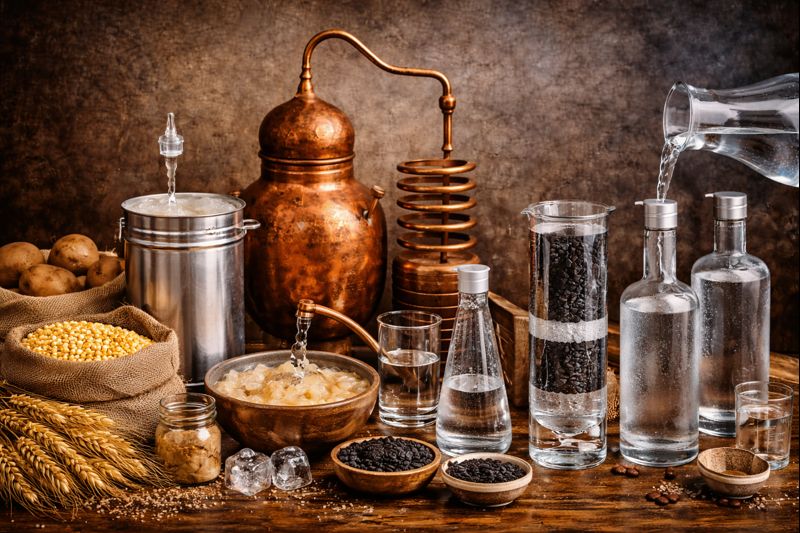
Vodka can be made from any fermentable source. Common bases include wheat, rye, corn, potatoes, and sometimes grapes or sugar beets. The choice of base subtly affects texture and mouthfeel, even when flavor is minimal. - Mashing and fermentation
The chosen raw material is milled and mixed with water. Enzymes convert starches into fermentable sugars. Yeast is added, fermenting the sugars into alcohol and producing a low-alcohol liquid similar to beer. - Distillation
The fermented liquid is distilled, often multiple times, in either pot stills or column stills. Column stills are most common for vodka, as they allow for higher alcohol purity and consistency. Distillation concentrates ethanol while removing many congeners. - Filtration
Vodka is typically filtered to remove remaining impurities. Charcoal filtration is traditional, though modern producers may use quartz, paper, or other media. Filtration contributes to vodka’s clean profile. - Dilution and bottling
The distilled spirit is diluted with water to bottling strength, usually around 40% ABV (80 proof), then bottled. No aging is required, which distinguishes vodka from many other spirits.
Classic vodka cocktails from around the world
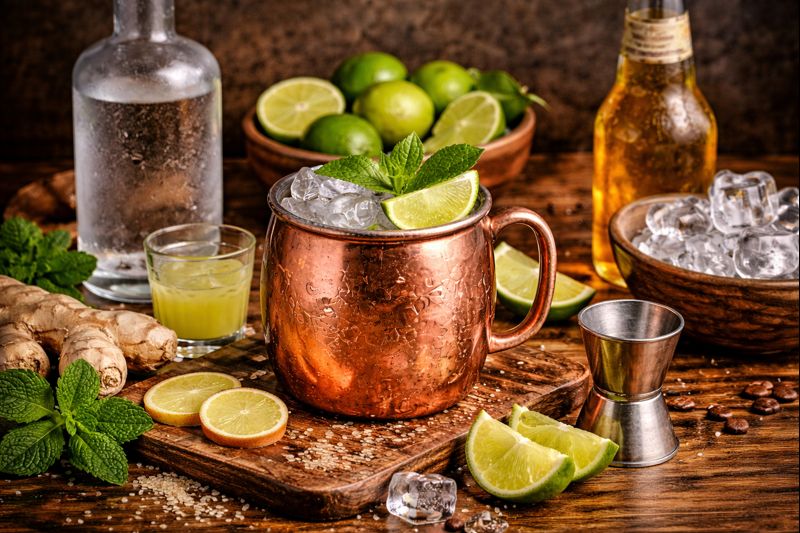
1. Moscow Mule (United States)
Despite its name, the Moscow Mule was created in the United States in the 1940s. It played a significant role in popularizing vodka in America.
Ingredients:
- 2.0 oz vodka
- 0.5 oz fresh lime juice
- 4.0 oz ginger beer
How to make the cocktail:
Fill a copper mug or highball glass with ice. Add the vodka and lime juice. Top with ginger beer and stir gently. Garnish with a lime wedge if desired.
2. Vodka Tonic (Europe, particularly UK and Spain)
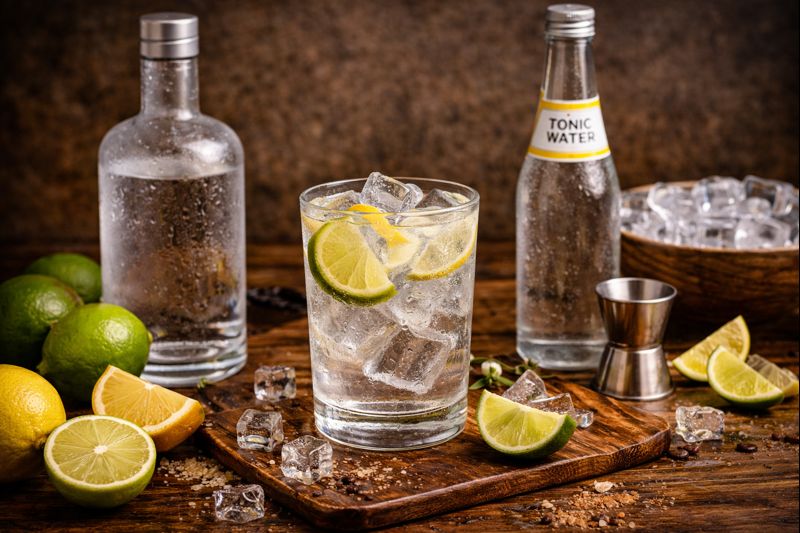
The Vodka Tonic rose to prominence in Europe during the mid-20th century, especially in the United Kingdom and later in Spain, where long, refreshing highballs dominate café culture.
Ingredients:
- 2.0 oz vodka
- 4.0 oz tonic water
How to make the cocktail:
Fill a highball glass with ice. Add the vodka and top with tonic water. Stir gently. Garnish with a lime wedge or lemon peel.
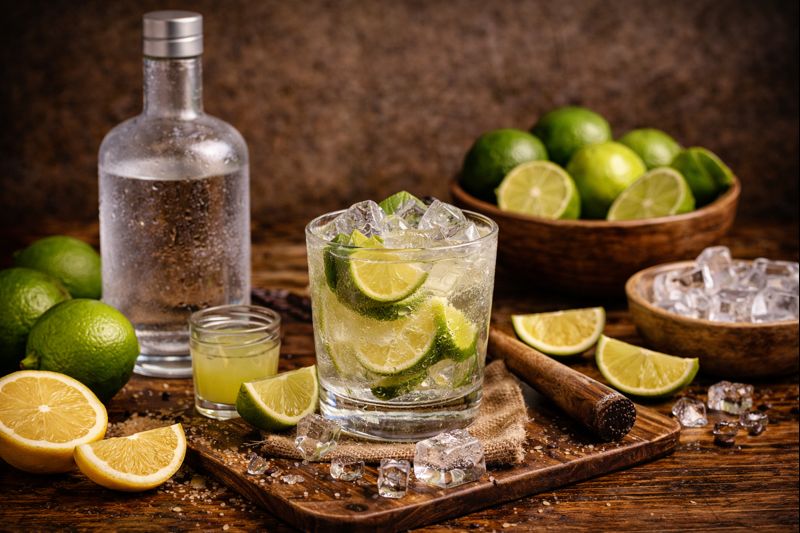
3. Caipiroska (Brazil)
The Caipiroska is a vodka-based variation of Brazil’s national cocktail, the Caipirinha. As vodka became more accessible globally, this adaptation gained popularity in Brazil and other parts of South America.
Ingredients:
- 2.0 oz vodka
- 1.0 lime, cut into wedges
- 0.75 oz simple syrup (or 2 tsp superfine sugar)
How to make the cocktail:
Add lime wedges and simple syrup to a rocks glass and muddle gently to release juice and oils. Fill the glass with ice, add vodka, and stir well to combine.
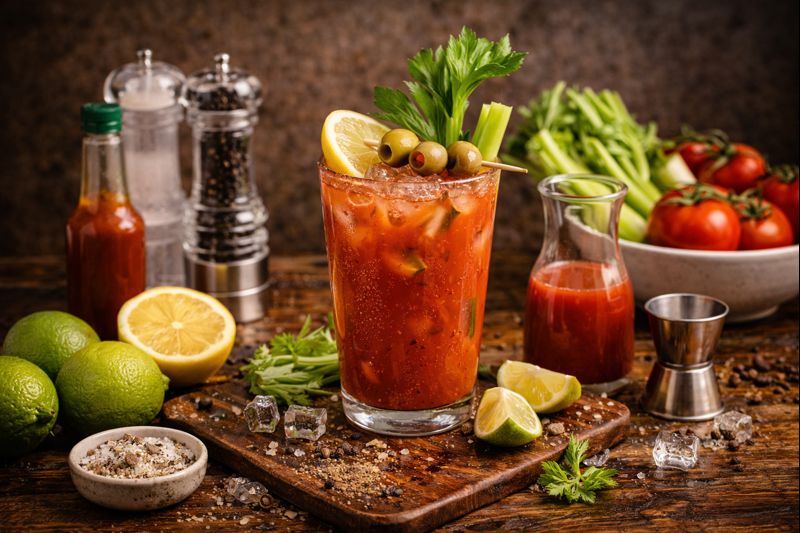
4. Bloody Mary (United States)
The Bloody Mary emerged in the early 20th century, with origins often linked to Paris or New York. It is notable for its savory profile and adaptability.
Ingredients:
- 2.0 oz vodka
- 4.0 oz tomato juice
- 0.5 oz fresh lemon juice
- 2–3 dashes Worcestershire sauce
- 2–3 dashes hot sauce
- Pinch of salt
- Pinch of black pepper
How to make the cocktail:
Add all ingredients to a shaker filled with ice. Roll or gently shake to combine without over-dilution. Strain into an ice-filled highball glass. Garnish according to preference (celery, olives, or lemon).
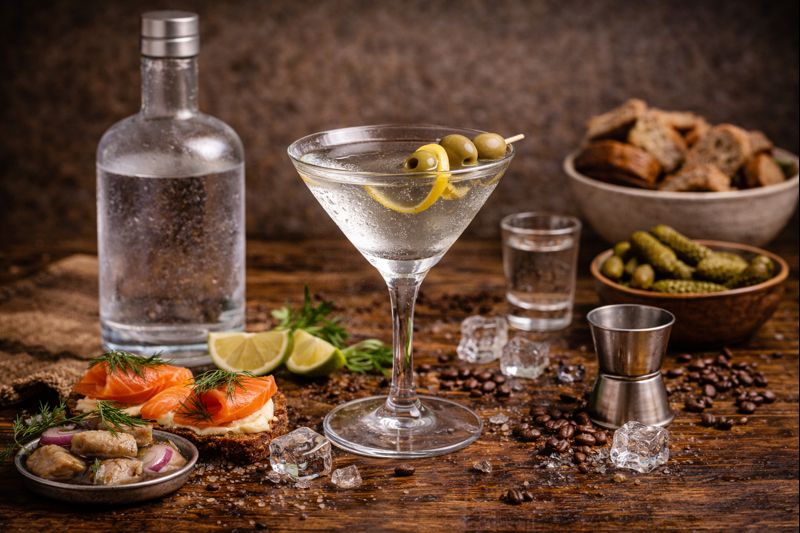
5. Baltic Martini (Eastern Europe)
While similar in structure to a Vodka Martini, the Baltic Martini reflects Eastern European preferences for extremely cold, highly diluted spirits with minimal modifiers.
Ingredients:
- 3.0 oz vodka
- 0.25 oz dry vermouth
How to make the cocktail:
Add ingredients to a mixing glass filled with ice and stir longer than usual to achieve high dilution and chill. Strain into a well-chilled martini glass. Garnish with a lemon twist.
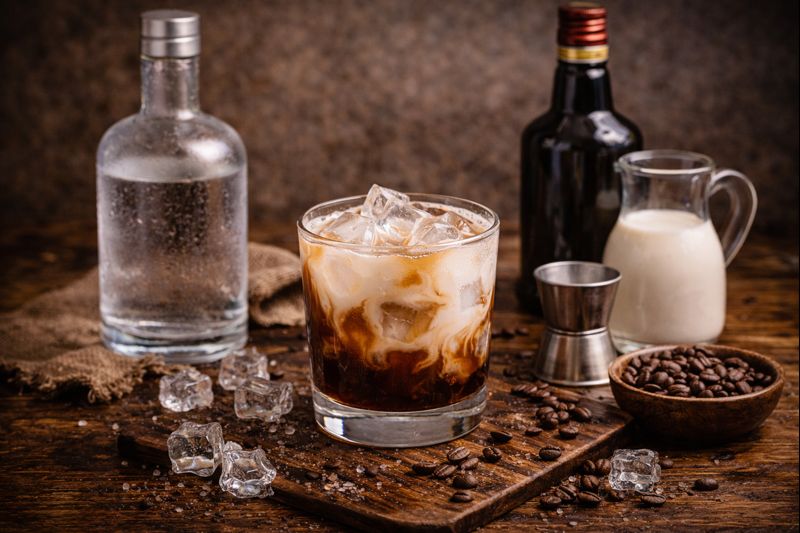
6. White Russian (United States)
The White Russian evolved from the earlier Black Russian and became globally recognized in the latter half of the 20th century.
Ingredients:
- 2.0 oz vodka
- 1.0 oz coffee liqueur
- 1.0 oz heavy cream
How to make the cocktail:
Fill an old-fashioned glass with ice. Add vodka and coffee liqueur. Gently float the cream over the top or stir lightly for a uniform texture.
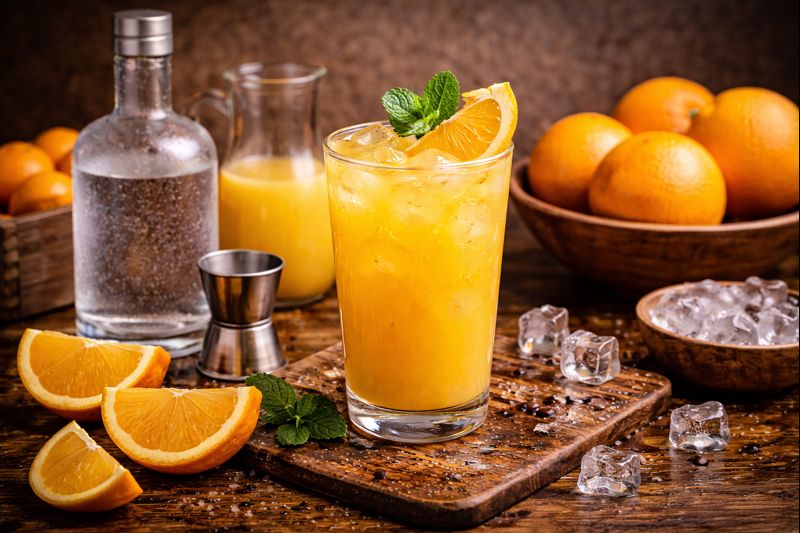
7. Screwdriver (International)
The Screwdriver is one of the simplest vodka cocktails and became widely popular in the mid-20th century, especially in casual and daytime settings.
Ingredients:
- 2.0 oz vodka
- 4.0 oz orange juice
How to make the cocktail:
Fill a highball glass with ice. Add the vodka and orange juice. Stir gently to combine. Garnish with an orange slice if desired.
Last sip
Classic Vodka Cocktail Day highlights the paradox at the heart of vodka’s appeal: a spirit defined by neutrality that nonetheless anchors some of the most enduring cocktails in the world. From its Eastern European origins to its role in modern bars across continents, vodka’s history, production, and adaptability explain its continued dominance. The classic cocktails outlined here demonstrate how measured simplicity, rather than complexity, has secured vodka’s place in global drinking culture.
 Bar and Bites Consulting
Leave a comment