
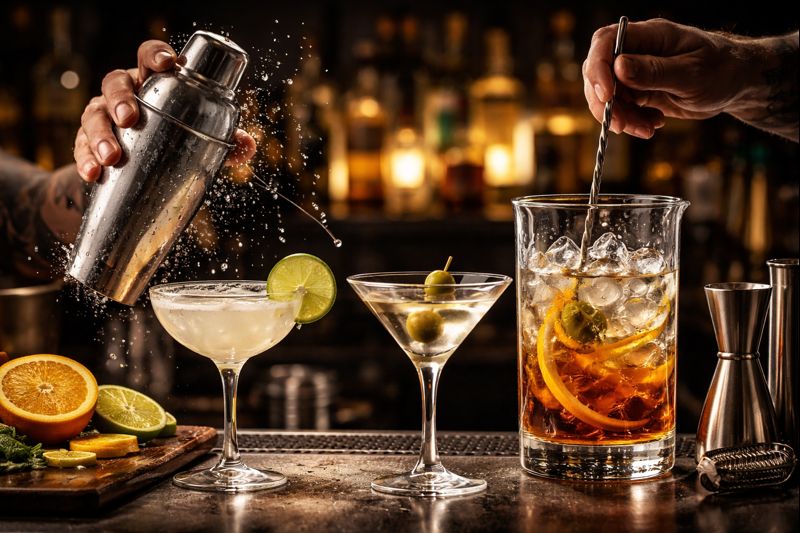
We’ve all heard it—James Bond’s iconic drink order: “Shaken, not stirred.” It sounds cool, sure, but if you’re serious about cocktails, you know that line is more Hollywood than hospitality. In the real world of bars, cafés, hotels and restaurants, knowing when to shake and when to stir a cocktail isn’t about style—it’s about science, technique, and taste.
If you’re managing a beverage program, training staff, or simply want to serve drinks that impress, this is one of the most essential distinctions in mixology.
The Core Difference
Let’s start simple: shaking and stirring are two very different methods of combining ingredients, and they each have a specific purpose.
Shaking involves placing ingredients in a shaker with ice and giving them a vigorous, energetic shake. This technique chills the drink fast, mixes ingredients thoroughly, adds aeration, and breaks the ice to achieve proper dilution. You’ll use shaking for cocktails that include opaque or thick components like citrus juice, cream, eggs, syrups, or fruit purée—ingredients that need a little muscle to come together.
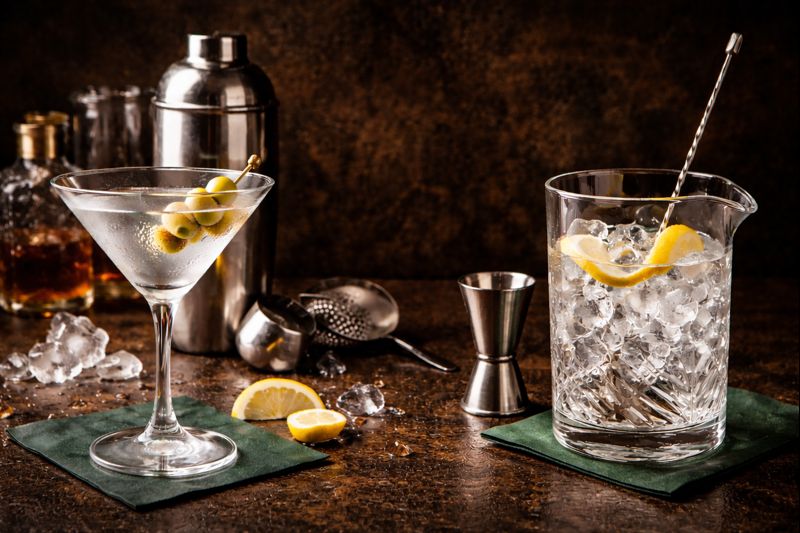
On the flip side, stirring is all about control and finesse. You use a bar spoon and a mixing glass to gently swirl your ingredients over ice. Stirring combines, cools, and dilutes without introducing bubbles or disrupting clarity. This method is the go-to for spirit-forward cocktails made entirely of clear liquids like whiskey, gin, vermouth, and bitters—drinks where smooth texture and visual elegance are key.
Temperature, Dilution, and Texture
Every time you shake or stir a drink, you’re influencing three core characteristics: how cold it is, how much water is mixed in and how it feels on the tongue.
Shaking tends to chill a drink more rapidly, introduces more water due to ice breakage, and creates a frothy, aerated texture. Stirring, by contrast, cools the drink more slowly, results in less dilution, and produces a silky-smooth texture with a clear appearance.
So, when a guest wants a bold, clean martini or an Old Fashioned with a velvety finish, stirring is your best friend. When someone orders a tart, refreshing daiquiri or a foamy whiskey sour, get ready to shake.
When to Shake a Cocktail
Shaking is ideal when the cocktail contains ingredients that don’t naturally mix well on their own. If you’re working with citrus juices (like lime, lemon, or grapefruit), egg whites or aquafaba, dairy, or thick syrups and purées, shaking is the way to go.
The rapid motion ensures that everything is fully combined, the drink is chilled quickly, and the resulting texture is vibrant and lively. Shaking also adds tiny air bubbles that lighten the drink and make it more refreshing.
Some classic shaken cocktails include the Margarita, the Whiskey Sour, the Daiquiri, and the Cosmopolitan. Each of these features ingredients that require more than a gentle stir to blend properly.
When to Stir a Cocktail
Stirring, on the other hand, is your method of choice when working with all-spirit cocktails—drinks made entirely from clear, alcoholic ingredients that blend easily. This technique is perfect for drinks where clarity, texture and nuanced flavour matter.
With stirring, the goal is to preserve the integrity of the spirits while chilling and slightly diluting the mixture. You don’t want foam, air, or cloudiness here. Just a smooth, cold sip that hits perfectly on the palate.
Think of cocktails like the Martini, Manhattan, Negroni, or Old Fashioned. These drinks are defined by balance and simplicity, and stirring lets their character shine through without any unnecessary flash.
Common Misconceptions
Many new bartenders fall into the trap of thinking that shaking is always the better—or fancier—choice. But the truth is, over-shaking certain drinks can ruin them. Shaking a cocktail made purely of spirits will over-dilute it, bruise the alcohol, and cloud what should be a clear presentation.
On the flip side, some worry that stirring won’t get a drink cold enough or dilute it properly. Done right, stirring for about 30 seconds with proper technique brings a cocktail to the perfect temperature with just the right balance of water to open up the flavours.
Another misconception? That you can just toss everything into a blender and call it a day. Unless you’re making a frozen cocktail, blending can absolutely wreck the texture and clarity that define many classic drinks.
Why It Matters in a Professional Setting
In busy restaurants, cafés, and hotel bars, training your staff to understand when to shake and when to stir isn’t just about tradition—it’s about consistency and quality.
Guests can taste the difference between a properly stirred Manhattan and one that was shaken out of habit. They’ll notice when their sour is beautifully frothy versus flat and under-mixed. And they’ll come back for the places that get it right every time.
Investing in staff education around these foundational techniques pays off. It ensures consistency in every shift, boosts guest satisfaction, and sets your beverage program apart from the competition.
Essential Tools for Both Techniques
To shake or stir properly, your bar should be stocked with the right gear. For shaking, you’ll need a Boston or cobbler shaker, a Hawthorne strainer, and a fine mesh strainer to catch ice chips or pulp. For stirring, a sturdy mixing glass, a long-handled bar spoon, and a julep strainer will serve you well.
Don’t skimp on quality. Durable tools not only perform better, but they also give staff the confidence and precision to do their jobs at a high level.
The Bottom Line
The question of whether to shake or stir isn’t about personal preference or flash—it’s about understanding the chemistry, tradition, and purpose behind the technique. When you choose the right method, you elevate every drink that crosses your bar.
So the next time a guest orders a cocktail, take a moment to think: What’s in it? What does it need? Then choose your technique accordingly. Shake with purpose. Stir with care.
Because in the world of cocktails, it’s not just what you make—it’s how you make it.
 Bar and Bites Consulting
Leave a comment