
The Science of Ice
The Hidden Ingredient in Every Cocktail
If you ask ten new bartenders what makes a great cocktail, you’ll probably hear:
- Quality spirits
- Balanced proportions
- Fresh juice
- Garnish game
All true. But ask a veteran bartender—someone who’s lived through sticky floors, slammed weekends, and menu rollouts—and you’ll likely hear: “Ice.”
Ice is the one ingredient that’s in almost every drink you make. Yet it’s also the one ingredient bartenders take for granted—until they don’t.
Perfect ice doesn’t just chill a drink. It:
- Controls dilution, preventing watery disasters.
- Maintains aroma and flavor integrity.
- Boosts guest perception—clear cubes = luxury.
- Signals professionalism to managers, co-workers, and guests alike.
And here’s the kicker: ice can directly affect your wages, tips, and career progression. A bartender who knows ice science is a bartender who gets noticed.
The Science of Ice and Dilution
When you stir or shake, you’re doing two things:
- Lowering temperature
- Adding dilution
Too little dilution = harsh, unbalanced drink.
Too much dilution = flat, watery mess.
The sweet spot? A cocktail served at -1°C to -4°C (30–26°F) with just enough dilution to round the edges.
Ice Density & Melt Rate
- Large cubes melt slower because they have less surface area relative to volume.
- Crushed or flaked ice melts rapidly, intentionally diluting refreshing cocktails like Mojitos and Juleps.
- Clear ice melts slower because it’s denser (fewer air pockets).
This isn’t trivia—it’s the foundation of cocktail control.
Rookie Mistakes vs Pro Moves
Rookie mistake:
Grabbing whatever ice is closest, tossing cubes into every drink, and hoping for the best.
Pro move:
Choosing ice intentionally based on cocktail style, guest experience, and service context.
Examples:
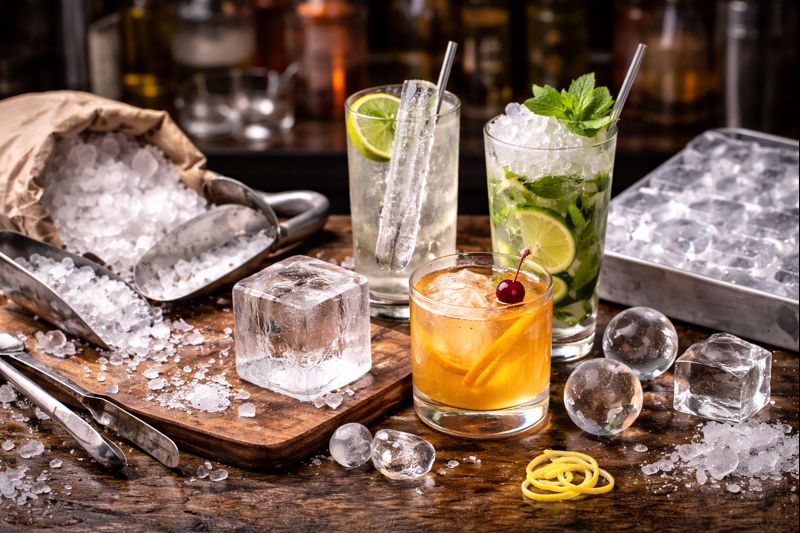
- Old Fashioned → large, clear cube for slow melt.
- Swizzle → crushed ice for texture + fast chill.
- G&T in a Collins glass → ice spear that fills the glass, minimizing melt and maximizing visual appeal.
Sidebar: Rates & Wages (Ice Awareness 101)
Newbies:
- Starting rate in many U.S. cities: $9–$12/hour + tips.
- If you show awareness of ice choices early, managers may bump you to better shifts faster. That means higher sales = bigger tips.
- Example: A Mojito with crushed ice looks proper, sells faster, and brings repeat orders—your tip jar notices.
Veterans:
- Average wage: $15–$25/hour + tips, sometimes $30+ in craft-heavy markets.
- Veterans who can run ice programs (clear cube molds, sphere prep, storage systems) position themselves for head bartender or bar manager roles at $55k–$75k/year.
- Consulting gigs: teaching a bar to upgrade its ice program can net $500–$1,500/day.
Bottom line: mastering ice science isn’t just nerdy—it’s profitable
The History of Cocktail Ice
From Luxury to Everyday Essential
Ice wasn’t always a given. In fact, it used to be such a rare commodity that having it in your drink was a status symbol. In the early 1800s, cocktails were room-temperature affairs. Then along came a man named Frederic Tudor, known as the Ice King, who built a fortune by cutting ice blocks from New England ponds and shipping them to the Caribbean, India, and beyond. Imagine sipping a chilled julep in Havana in 1830—it screamed money.
Bartenders of the golden age, like Jerry Thomas, turned ice into theater. Drinks were shaken hard, strained elegantly, and served over cracked or shaved ice carved by hand. Thomas’s 1862 book, How to Mix Drinks, includes ice notes in nearly every recipe.
Prohibition and Ice Decline
During Prohibition (1920–1933), quality ice use declined. Speakeasies cared more about hiding booze than celebrating it. Ice was mass-produced, often cloudy, and used in bulk. The craft was lost.
Post-WWII, ice machines became common in hotels and bars. Suddenly, every gin and tonic came with the same clunky cubes. Convenient? Yes. Memorable? No.
The Craft Revival
The 2000s brought the cocktail renaissance, led by bartenders in New York, London, and Tokyo. Suddenly, ice was back in focus. Clear cubes, carved spears, and spheres became a marker of quality. Bars invested in Clinebell machines($5,000+) to carve flawless blocks.
Today, ice is both practical and performative. Guests expect premium cocktails to come with premium ice. Clear cubes are photographed as often as the drinks themselves.
Rate & Wage Sidebar: Ice in History vs Now
- 1800s bartenders: Rare skill, but not big money—bartending wasn’t yet a respected career.
- Prohibition bartenders: Fast, sloppy service. Pay was survival-level.
- Modern bartenders: Ice mastery = career leverage. Craft-focused bars often pay 25–40% higher hourly rates than volume bars because they demand more skill, consistency, and presentation.
Ice Shapes & Their Roles
Standard Cubes
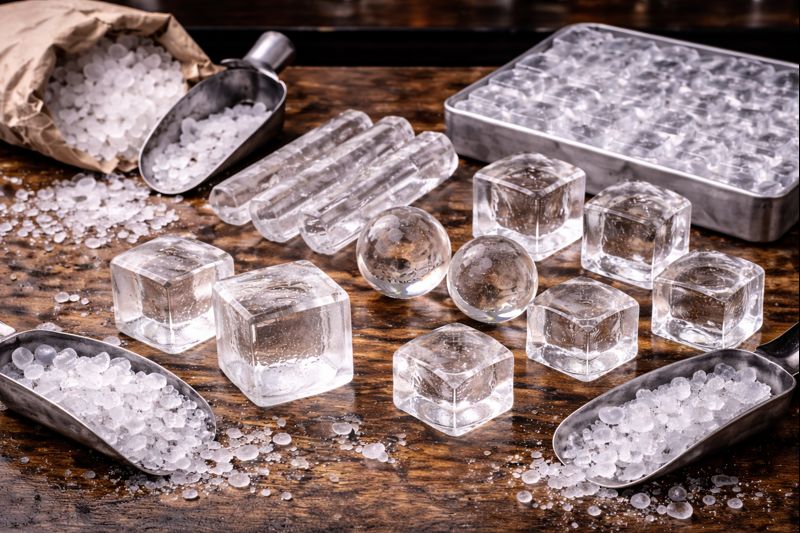
- Use: Highballs, Collins, shaken cocktails.
- Melt rate: Medium.
- Rookie mistake: Filling half a glass, leaving liquid to dilute faster.
- Pro move: Pack the glass full—more ice means slower dilution.
Large Cubes & Spheres
- Use: Old Fashioned, Negroni, spirit-forward whiskey/rum drinks.
- Melt rate: Slow.
- Impact: Makes a $12 drink look like a $20 drink.
- Rates impact: Veterans who can prep clear spheres in volume are assets—managers love them.
Collins Spears
- Use: Gin & Tonic, Collins, Vodka Soda.
- Melt rate: Slow, elegant.
- Impact: Instagram catnip—makes even a basic vodka soda “craft.”
Crushed Ice
- Use: Juleps, Mojitos, Tiki.
- Melt rate: Fast, intentional.
- Impact: Refreshing and textural. Guests expect crushed ice in these drinks.
- Rookie mistake: Using standard cubes in a Julep = instant credibility loss.
Pebble Ice (a.k.a. Sonic Ice)
- Use: Swizzles, tropicals, NA cocktails.
- Pros: Satisfying chew, fun texture.
- Cons: Expensive machines.
- Guest perception: Feels playful, accessible, trendy.
Shaved/Flaked Ice
- Use: Frozen drinks, snow cone-style cocktails.
- Impact: Pure theatre.
- Pro move: Pile it high for dramatic effect.
Specialty/Custom Logo Ice
- Use: Premium bars, hotels, luxury lounges.
- Impact: Branding at the bottom of a glass. Pure luxury flex.
- Rates impact: Veterans in these programs often hit $70k–$90k/year in beverage director roles.
Making & Storing Ice (Home + Bar)
Clear Ice at Home (Directional Freezing)
- Fill a small insulated cooler with water.
- Freeze uncovered.
- Cut off cloudy bottom layer.
- Carve cubes or spheres.
Bar-Level Clear Ice
- Clinebell machines: Freeze 300-pound clear blocks, cut with chainsaws.
- Commercial cube machines: Hoshizaki, Manitowoc—produce high-quality cubes.
Storage & Handling
- Ice absorbs odors—store airtight.
- Never scoop with glass (rookie mistake, health code violation).
- Rotate stock; old ice tastes stale.
ROI for Bars
- DIY molds: ~$50–$100, labor-intensive.
- Mid-tier machine: ~$3,000, reliable, moderate output.
- Clinebell: ~$6,000, pays for itself if cocktails sell $15–$20.
Guest Psychology & Sales Impact
The Premium Perception
Guests don’t always know why, but they feel the difference when a drink is served over perfect ice.
- Clear cube = “worth the price.”
- Crushed ice = “refreshing, summery.”
- Collins spear = “elegant, Instagrammable.”
Social Media Factor
Clear ice has its own hashtag (#clearice). Bars that feature it often see free marketing as guests post photos.
NA & Low-ABV Cocktails
Presentation matters even more when alcohol isn’t the star. A $12 mocktail looks justifiable with a clear spear and edible flower inside.
Pro Hacks & Advanced Techniques
- Lewis Bag & Mallet: Old-school crushed ice, dramatic guest show.
- Flavored Cubes: Freeze coffee, tea, or juice cubes to slowly flavor cocktails.
- Herb/Flower Cubes: Encased garnish = Instagram hit.
- Tableside Cracking: Carving ice spheres at the bar = theatre + tips.
- Batching: Prep spheres and spears before service to avoid mid-shift chaos.
Career Growth & The Future of Ice
Career Growth
- Newbies: Ice knowledge helps you skip “barback purgatory” faster.
- Veterans: Clear ice programs justify higher wages, consulting roles, or director positions.
The Future of Ice
- Tech: Affordable clear ice machines for smaller bars.
- Design: Embossed logos, shapes, infused cubes.
- Sustainability: Energy-efficient machines, meltwater reuse, lower waste.
Closing Pour
Ice is not an afterthought. It’s the backbone of cocktail craft and a driver of wages and opportunities. If you’re a newbie, master the basics: crushed, cubes, large format. If you’re a veteran, push your program: clear ice, spheres, custom branding.
Because in the end? Perfect ice doesn’t just make better drinks—it makes better bartenders.
 Bar and Bites Consulting
Leave a comment