
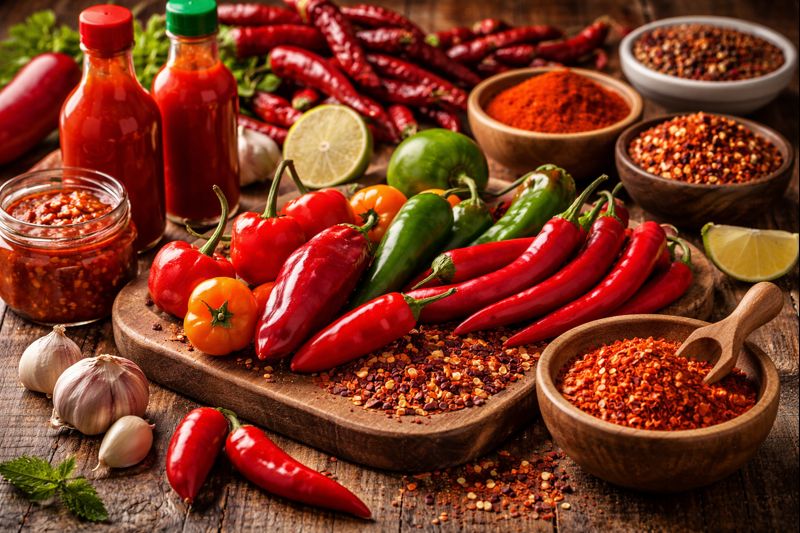
Hot and spicy food has long occupied a central role in global culinary traditions, not merely as a vehicle for intensity but as a reflection of climate, trade, agriculture, and social history. Long before refrigeration, spice was valued for its preservative qualities. In many cultures, heat also became associated with vitality, hospitality, and identity. Over time, these practical and cultural factors evolved into iconic dishes that remain popular today. Similarly, spice found its way into cocktails as bartenders sought balance, stimulation, and complexity rather than sweetness alone. Examining hot and spicy food alongside classic cocktails reveals parallel histories of adaptation and refinement.
Hot and spicy food: three globally popular pillars.
Nashville hot chicken (United States)
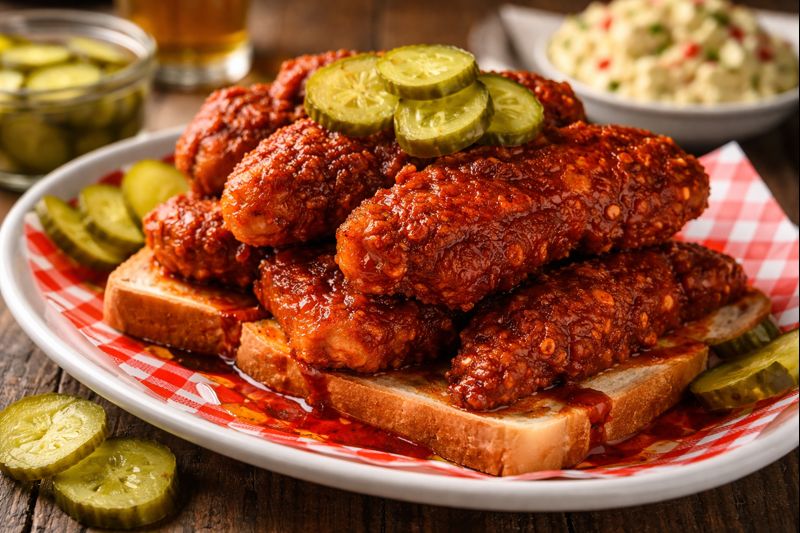
Nashville hot chicken is now widely imitated, but its origins are specific and culturally grounded. The dish emerged in the early twentieth century within Nashville’s Black community, where fried chicken was already a staple of Southern cooking. The innovation lay in the aggressive use of cayenne pepper, layered after frying rather than during seasoning, allowing the heat to sit boldly on the surface.
The most widely cited origin story centers on Thornton Prince, whose penchant for nightlife allegedly inspired a retaliatory breakfast of excessively spicy chicken. Rather than rejecting it, Prince refined the concept and later opened Prince’s Hot Chicken Shack. The restaurant became a multigenerational institution, and heat levels evolved into a defining feature, transforming spice into both a challenge and a badge of honor.
Culinarily, Nashville hot chicken is notable for its technique. The chicken is brined or marinated, dredged, fried, then coated in a cayenne-laced oil made from frying fat, paprika, garlic powder, and sugar. Serving it on white bread with pickles is not incidental; the bread absorbs oil, and the acidity of the pickles offsets fat and heat. While contemporary versions appear on upscale menus, the dish remains emblematic of working-class ingenuity and regional pride.
Mapo tofu (China)
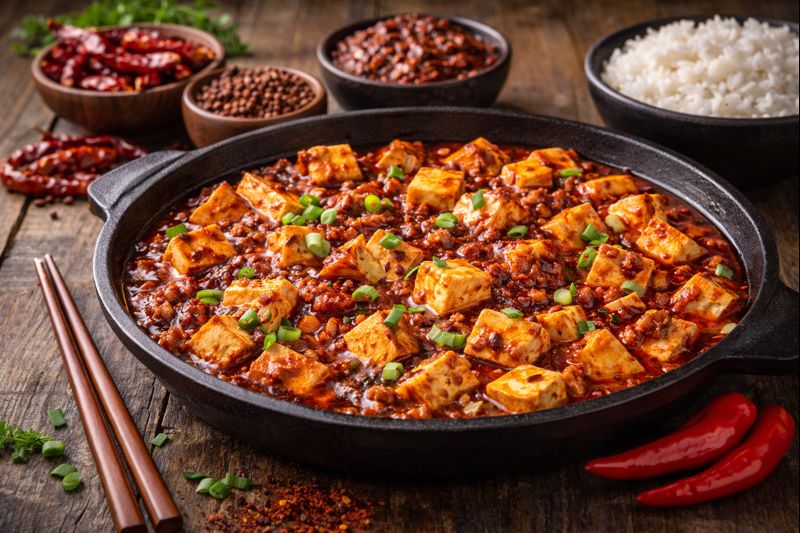
Mapo tofu illustrates a different philosophy of spice, one rooted in balance rather than dominance. Originating in Sichuan province during the late Qing dynasty, the dish reflects a regional palate shaped by humid climate and an abundance of local peppers and aromatics. Sichuan cuisine aims to awaken the senses through contrast, particularly via málà, the interplay of chili heat and the numbing citrus quality of Sichuan peppercorns.
Legend attributes Mapo tofu to a woman who ran a small restaurant near Chengdu. Her dish combined inexpensive tofu with minced meat and fermented bean paste, producing a meal that was accessible yet deeply flavorful. Over time, it became a benchmark of Sichuan cooking, studied by chefs as an example of precise seasoning.
Mapo tofu’s enduring popularity stems from its layered structure. Soft tofu provides neutrality and texture, while chili oil, doubanjiang, garlic, ginger, and scallions build complexity. The dish is spicy, but the heat is moderated by umami and aroma. Its influence extends well beyond China, shaping modern interpretations of spicy cuisine that emphasize balance over brute force.
Jerk chicken (Jamaica)
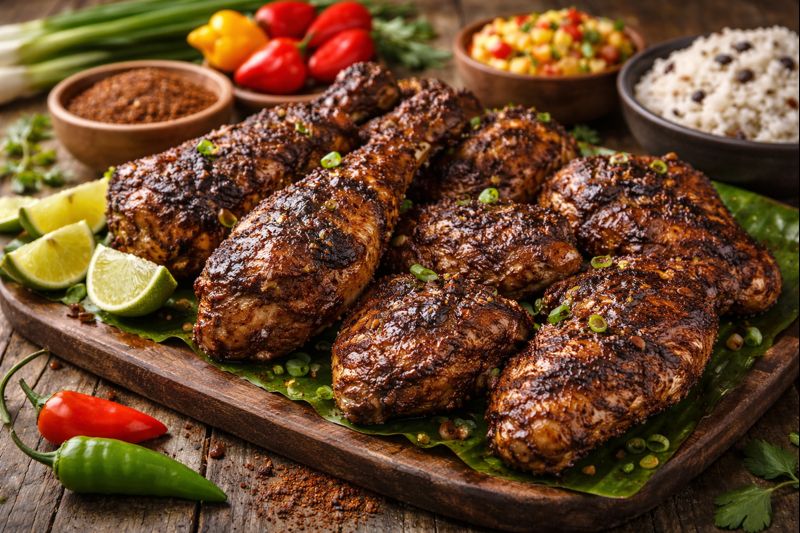
Jerk chicken represents one of the most historically significant spicy cooking traditions in the Caribbean. Its roots lie in survival and resistance. Enslaved Africans who escaped British plantations formed Maroon communities in Jamaica’s mountainous interior. To avoid detection, they developed cooking methods that minimized smoke and preserved meat for extended periods.
The seasoning mixture that defines jerk relies heavily on Scotch bonnet peppers, among the hottest chilies commonly used in traditional cooking. These peppers are paired with allspice, thyme, scallions, garlic, ginger, and sometimes cinnamon or cloves. The resulting flavor profile is intensely spicy yet aromatic, combining heat with sweetness and earthiness.
Jerk chicken is traditionally cooked slowly over pimento wood, allowing smoke to integrate with spice. Today, it is both a street food staple and a national symbol, representing Jamaica’s history, resilience, and assertive culinary voice. Its global popularity has introduced many diners to Caribbean heat, though authentic jerk remains inseparable from its cultural context.
And now, we will see some of the spicy cocktails out there that you might already know! They are spicy and famous.
The Bloody Mary
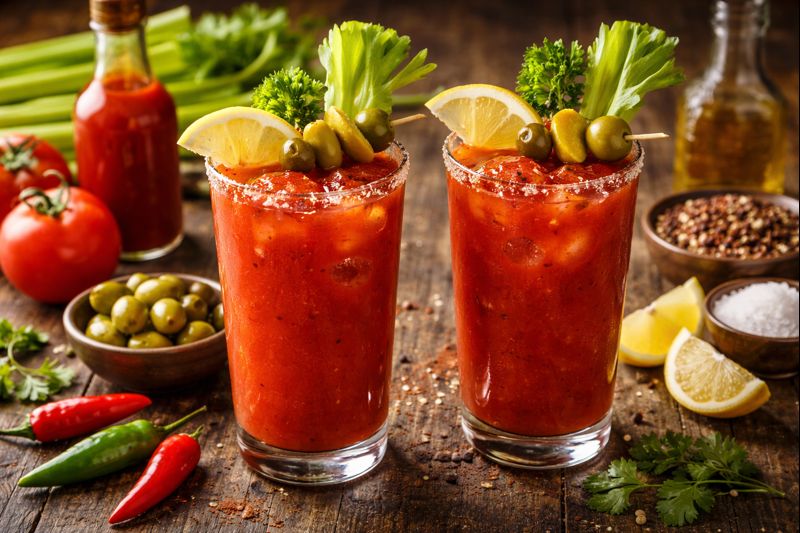
The Bloody Mary occupies a unique position in cocktail history as one of the earliest savory drinks to achieve mainstream popularity. Its emergence in the 1920s coincided with vodka’s growing international presence and a broader shift toward lighter, daytime-friendly cocktails. Fernand Petiot’s early versions were simple, but American palates soon demanded complexity.
Spice transformed the Bloody Mary from novelty to institution. Black pepper, hot sauce, Worcestershire sauce, celery salt, and horseradish created a drink that mirrored soup or consommé more than a traditional cocktail. This savory structure made it especially compatible with spicy food, as it refreshes while reinforcing heat.
The Bloody Mary also became a canvas for customization. From modestly seasoned versions to intensely spicy interpretations, it demonstrated that heat in cocktails could be deliberate and controlled, not gimmicky.
Classic Bloody Mary recipe ingredients:
Vodka, tomato juice, fresh lemon juice, Worcestershire sauce, hot sauce, celery salt, and black pepper. Stir gently with ice and serve over ice
The Margarita with chili heat
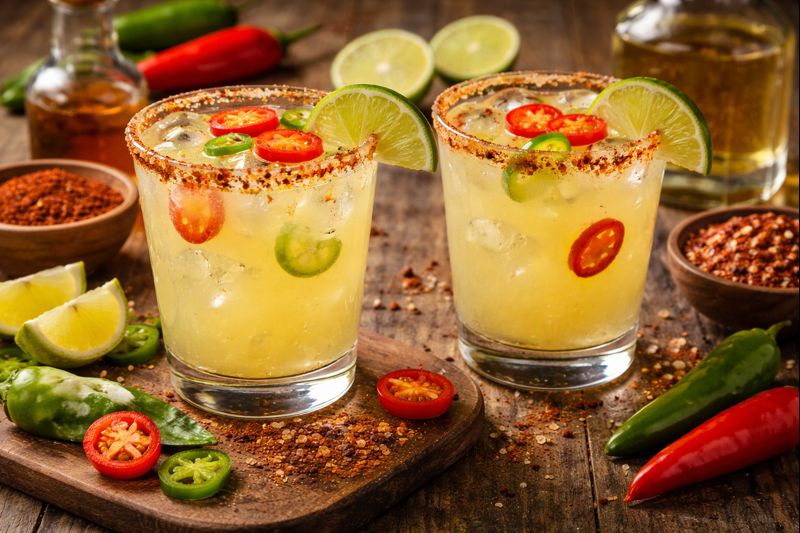
The Margarita’s historical importance lies in its simplicity and adaptability. Emerging along the U.S.–Mexico border, it reflects the convergence of Mexican tequila culture and American cocktail structure. Tequila, lime, and orange liqueur form a template that readily accepts variation.
Introducing chili heat to the Margarita is a relatively modern development, but one grounded in logic. Chili complements tequila’s vegetal agave notes and amplifies citrus brightness. Rather than overwhelming the drink, controlled heat adds length and depth, making the Margarita more food-friendly, particularly with spicy dishes.
Spicy Margaritas are now a staple in contemporary bars, reinforcing the idea that heat can function as seasoning rather than shock.
Spicy Margarita recipe ingredients:
Tequila blanco, fresh lime juice, orange liqueur, and fresh chili or chili-infused tequila. Shake with ice and strain into a salt-rimmed glass over fresh ice.
The Michelada – and probably my favourite
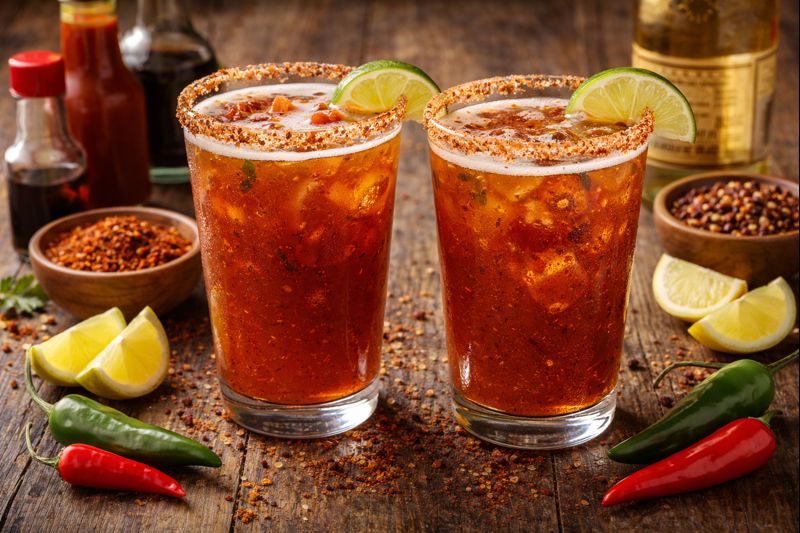
The Michelada demonstrates how spice can elevate even the simplest beverage. Rooted in Mexican beer culture, it reflects a longstanding tradition of customizing lagers with lime, salt, and chili. Unlike cocktails built around spirits, the Michelada emphasizes refreshment and drinkability.
Its popularity grew in the mid-twentieth century as bottled sauces and seasonings became widely available. Worcestershire sauce, hot sauce, and soy-based seasonings added savory depth, while chili heat provided contrast to cold, lightly bitter beer.
The Michelada’s enduring appeal lies in its adaptability. It can be mild or fiery, simple or complex, but chili remains central to its identity.
Classic Michelada recipe ingredients:
Mexican lager, fresh lime juice, hot sauce, Worcestershire sauce, and salt. Serve over ice in a salt-rimmed glass.
Across cultures and centuries, hot and spicy food has served as a reflection of environment, necessity, and identity. Whether born from resourcefulness, resistance, or regional abundance, these dishes demonstrate that spice is rarely accidental. The same principle applies to cocktails, where heat enhances structure and balance when used with restraint. Together, spicy food and cocktails illustrate how intensity, when grounded in history and technique, becomes not just popular but enduring.
 Bar and Bites Consulting
Leave a comment