
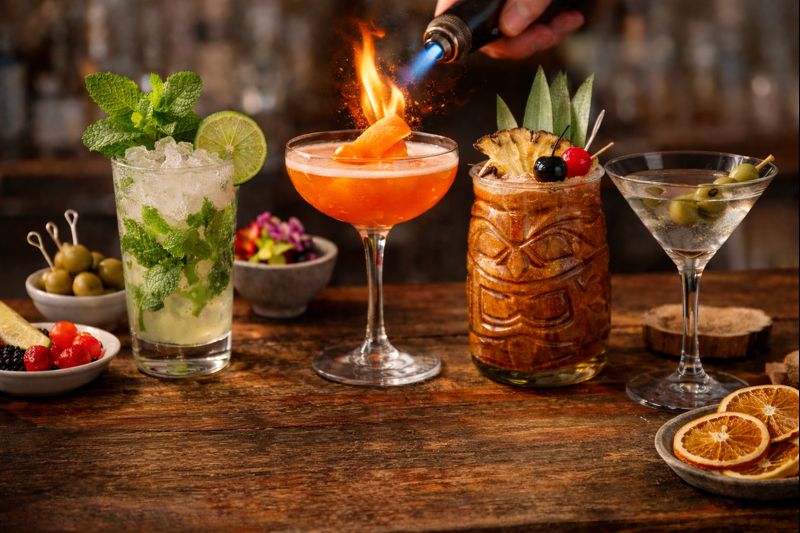
Whether you’re serving drinks at a packed bar or mixing up cocktails at home for friends, garnishes are your secret weapon. They can turn an average drink into a piece of art, help balance the flavors, or simply make someone say, “Whoa—what’s that?” But with so many options (herbs, fruit, flames?!), it can get confusing fast. Don’t worry—we’re breaking down everything you need to know to use garnishes like a true cocktail pro.
1. What Exactly Is a Garnish? (And Why It Matters)
A garnish isn’t just the pretty thing sitting on top of a drink—it’s the final ingredient that can elevate your cocktail from “good” to “amazing.” A twist of lemon adds brightness. A sprig of rosemary brings aroma. A salted rim changes the first sip. Whether it’s for visual appeal, smell, flavor, or texture, a great garnish has a purpose. If it doesn’t enhance the drink in some way, it’s just clutter. The best garnishes feel intentional, like a perfectly chosen accessory for a killer outfit.
2. The Four Jobs of a Garnish
Think of garnishes as overachievers. They’re not just there to sit on the glass and look nice—they do work. First, they add visual appeal, making drinks pop on the bar or in a photo. Second, they amplify aromas that hit your nose before the first sip. Third, they enhance taste, either subtly (like citrus oil) or directly (like a briny olive in a martini). Finally, they tell a story—a tiny visual cue that gives the drink personality. When done right, your garnish isn’t just extra; it’s essential.
3. Type of garnishes
– Citrus: The Real MVP of Garnishes
Lemons, limes, oranges, and grapefruits are garnish royalty—and for good reason. A citrus twist can brighten a drink, add a little bitterness, and give it a crisp aroma that makes your brain go, “Yep, that smells like a good time.” A thin peel twisted over the glass releases essential oils that float right on top of the drink, enhancing every sip. Wedges and wheels also work, but make sure they’re fresh and neatly cut. A dried-out lemon wedge is a quick way to make your drink look lazy.
– Herbs: Add Aroma and Freshness in One Go
Herbs like mint, basil, thyme, and rosemary don’t just look nice—they’re aromatic powerhouses. When you slap a fresh sprig of mint (gently!) before adding it to a mojito, you activate the oils that give it that signature fresh scent. Rosemary works wonders with gin or bourbon, especially when you give it a little char for a smoky edge. Always use fresh, vibrant herbs—not limp or browned ones. And remember: one well-placed sprig beats a full salad in your glass.
– Flowers: Elegant, Edible, and Eye-Catching
Edible flowers can turn a simple cocktail into a work of art. Whether you’re using tiny violets, pansies, or marigolds, flowers add delicate beauty—and sometimes even flavor. They’re especially great in floral cocktails or light spritzes. But here’s the catch: only use edible varieties (not just anything pretty from the garden) and make sure they’re pesticide-free. A single, perfectly placed flower is classy. A handful can start to look like a florist got drunk.
– Fruits and Berries: Add Color and Natural Sweetness
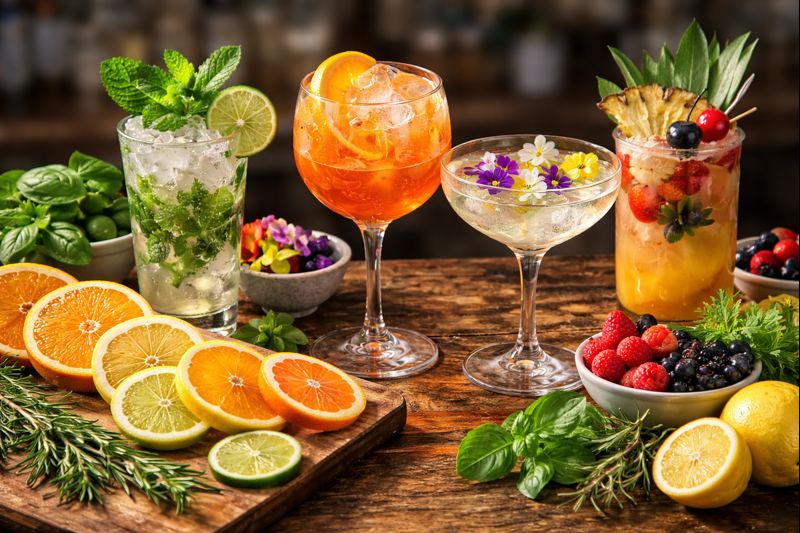
Fruit garnishes do double duty: they look great and bring out flavors already in the drink. Fresh strawberries in a fruity spritz, blueberries on a pick, or a slice of pineapple in a rum cocktail all make sense. Dehydrated citrus wheels are super trendy right now—they add a rustic, pro-level look and hold up longer than fresh slices. Just avoid overloading the glass with fruit. It’s a cocktail, not a sangria tub. A little goes a long way.
– Pickled and Savory Garnishes: Bring the Brine
Not all garnishes are sweet or pretty—some are bold and briny. Think olives in a martini, pickled onions in a Gibson, or spicy beans in a Bloody Mary. These savory touches add umami and contrast beautifully with high-proof or savory cocktails. They also add texture and make the drink feel more substantial. Just make sure whatever you use is high quality—no one wants a mushy olive or a floppy pickle ruining the vibe.
– Rims: Flavor Before the First Sip
Rimming a glass is an easy way to add flavor, texture, and excitement to a drink. Salt on a margarita rim is iconic. Sugar rims add a sweet contrast to sour cocktails. Spicy rims like chili-salt or Tajín can give citrusy drinks a serious kick. The trick is to lightly moisten the rim (with lime juice or syrup), dip it in the flavor mix, and shake off the extra. A good rim hits your lips before the liquid does—and that first impression counts.
– Picks and Skewers: Keep It Tidy and Stylish
Garnishes on a pick don’t just look nice—they’re practical. Use them to stack berries, cherries, citrus slices, or anything you want to keep out of the drink itself. They make it easier to grab and eat garnishes (and keep them from floating into your nose). Use wooden, metal, or bamboo picks—whatever matches your style. And yes, a sword pick can be fun in the right setting (pirate-themed tiki bar, anyone?).
– Ice Can Be a Garnish Too
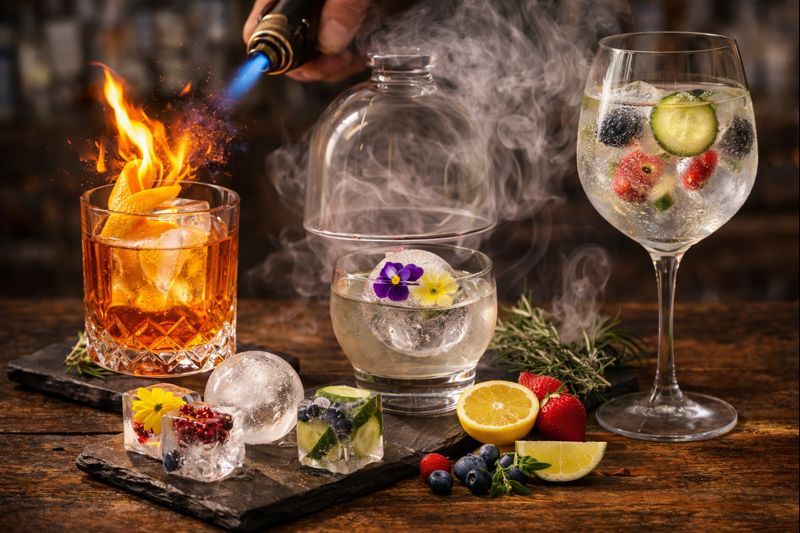
Most people don’t think of ice as a garnish, but it absolutely can be. Large, clear cubes or spheres instantly make a drink look more refined. Even better, you can freeze fruit, herbs, or edible flowers into ice for extra flair. Just remember: cloudy, chipped freezer ice doesn’t have the same effect. Good ice not only looks better but melts slower—keeping your drink colder without watering it down too quickly.
– Smoke and Fire: Theatrical and Sensory
If you want to make someone say “WOW,” this is where you go. Flaming citrus peels, smoked herbs, and even smoked glassware add drama and sensory depth. The smell of smoldering rosemary, for example, can instantly change how a drink tastes. Always be safe when playing with fire (really—we mean it), and don’t overdo it. A little smoke goes a long way and adds a sophisticated, layered experience to your drink.
4. Match the Garnish to the Drink’s Personality
Your garnish should match the drink’s mood. Is it classic and elegant? Keep it simple—maybe a citrus twist or a cherry. Is it fun and tropical? Go bold—pineapple leaves, umbrellas, the works. Don’t mix signals. A Bloody Mary with an orchid or a Negroni with a strawberry just feels… off. Let the drink’s flavor and style guide your garnish choices so everything feels cohesive.
5. Size Matters: Don’t Overwhelm the Glass
A garnish should enhance the drink, not compete with it. It shouldn’t block the nose, make it hard to drink, or look like it’s attacking the glass. Use garnishes that are sized appropriately for the glass and drink. One clean orange peel beats three lime wedges and a tower of mint. Less can be more—especially when everything is placed with intention.
6. Garnishes Start with the Nose
Flavor begins with smell. That’s why a fresh herb or expressed citrus peel right at the rim of a glass can totally change the drinking experience. Before the first sip hits your tongue, your brain is already forming expectations based on what you smell. Use that to your advantage. If you want to highlight herbal notes in a drink, a sprig of rosemary or mint placed smartly near the nose can lead the way.
7. Freshness Is Non-Negotiable
Old, dry, or wilted garnishes are a buzzkill. They make your cocktail look—and taste—lazy. Always use fresh herbs, fruits, and flowers. Keep citrus refrigerated, store herbs wrapped in damp paper towels, and slice fruit just before service when possible. If your garnish looks tired, your drink will too.
8. Prepping for Speed (Without Losing Quality)
In a busy bar, you can’t cut every lime or skewer every cherry to order. Prepping is key—but so is doing it right. Keep herbs hydrated and chilled, citrus covered and fresh, and skewers neat and uniform. Invest in garnish trays and prep stations to stay organized. A well-prepped garnish station is the difference between fast, beautiful drinks and chaos during rush hour.
9. Garnish With Sustainability in Mind
Garnishes can create a lot of waste if you’re not careful. The good news? There are tons of ways to stay green. Use leftover peels after juicing for twists. Dehydrate citrus slices that are past their prime. Repurpose herb stems for syrups or infusions. Sustainability doesn’t mean sacrificing beauty—it just means being a little smarter about how you source and use your materials.
10. What’s Trending Right Now?
Cocktail garnishes go through trends just like food and fashion. Right now, some hot trends include:
- Dehydrated citrus wheels (they look amazing and last forever)
- Floral ice cubes
- Minimalist garnishes (less is more)
- Aromatic smoke and fog
- Herb bouquets (small ones—don’t go full bouquet)
Trends are fun to play with, but don’t follow them blindly. Pick what fits your bar, your style, and your drink.
11. Every Garnish Tells a Story
A good garnish gives a clue about the drink’s ingredients, inspiration, or intention. A chili in a smoky mezcal cocktail hints at heat and depth. A pineapple leaf in a tiki drink nods to tropical flavors. Garnishes can connect your drink to a season, a region, or even a feeling. Use that power to your advantage. Drinks are stories in a glass—make the garnish part of the plot.
12. Garnish With Confidence (And Purpose)
At the end of the day, garnishing is part art, part science, and part personality. If you understand the flavor of your drink, know what you’re trying to express, and choose your garnish with care—you can’t go wrong. Keep it intentional, creative, and fun. And most of all, remember: it’s not just a final touch—it’s the finishing move that ties everything together.
 Bar and Bites Consulting
Leave a comment