
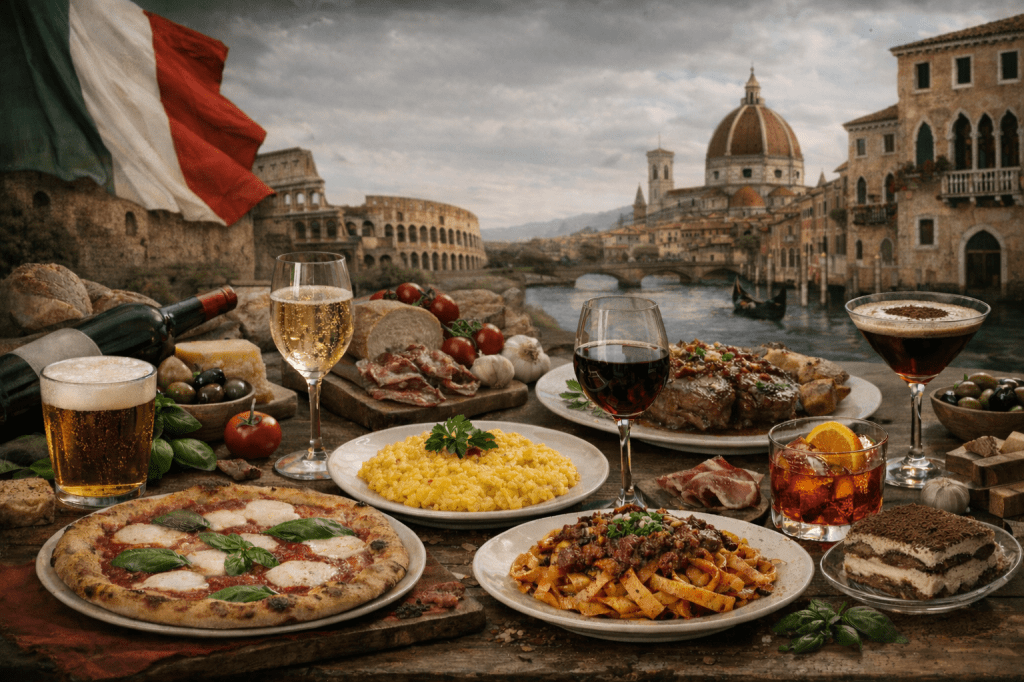
This is a moment to pause and reflect on one of the most influential culinary traditions in the world. Italian cuisine is often associated with comfort, familiarity, and iconic dishes, yet its significance extends far beyond popular perception. At its core, Italian food culture is a reflection of history, geography, and social values, shaped over centuries by regional identity, agricultural discipline, and a shared respect for tradition. Celebrating Italian cuisine means acknowledging not only what is served on the plate, but also the cultural philosophy that guides how food is prepared, shared, and enjoyed.
Italian cuisine proves that simplicity, when done well, is timeless.
Italian cuisine is inseparable from Italy’s historical development, and several key moments have shaped its cultural foundations.
- One of the earliest influences originates in Ancient Rome, where agriculture, bread-making, olive oil production, and wine cultivation were systematized. These elements became dietary cornerstones, reinforcing the idea that Italian cuisine is built on necessity, balance, and sustainability. Communal dining was central to Roman society, embedding the concept that meals are social rituals rather than solitary acts.
- A second defining period emerged during the Renaissance, when food became intertwined with art, philosophy, and social status. Italian courts elevated cooking into a refined discipline, formalizing dining structures and emphasizing presentation, pacing, and harmony. Cookbooks circulated, chefs gained recognition, and meals became expressions of cultural sophistication.
- The third major historic milestone occurred during Italian unification in the 19th century, when diverse regional cuisines began to coexist under a shared national identity. Northern and southern culinary differences were preserved rather than erased, creating a mosaic of regional traditions that still define Italian cuisine today.
Alongside cultural history, Italian food itself evolved through pivotal historical shifts that reshaped its identity.
- One of the most transformative moments came with the introduction of New World ingredients, particularly tomatoes. Initially viewed with suspicion, tomatoes eventually became essential to Italian cooking, especially in southern regions, forming the foundation of sauces that now symbolize Italian cuisine worldwide.
- Another defining development was the rise of pasta as a staple food, particularly dried pasta during the Middle Ages. Pasta offered practicality, longevity, and versatility, allowing regional ingredients and techniques to shape countless variations while reinforcing a shared culinary language across Italy.
We invite you to a sensory celebration through classic dishes thoughtfully paired with alcoholic beverages that enhance their character and some classic cocktails as well
- Margherita Pizza, born in Naples and rooted in simplicity, reflects the Italian principle of restraint. Its balance of tomato, mozzarella, and basil pairs seamlessly with a dry Italian lager, whose crispness cuts through richness, or a light-bodied Chianti that complements acidity without overpowering flavor.
- Risotto alla Milanese, emblematic of northern Italy’s reliance on rice and dairy, tells a story of trade, wealth, and refinement through its saffron infusion. Its creamy texture pairs best with Pinot Grigio or Franciacorta, wines that cleanse the palate while maintaining elegance.
- Tagliatelle al Ragù, a slow-cooked emblem of Bologna, highlights patience and technique. Its deep, layered flavors are best matched with structured red wines such as Barolo or Sangiovese, which mirror the dish’s richness and regional authenticity.
- Osso Buco, another Milanese classic, elevates humble ingredients through careful braising. Its richness is balanced effectively by a classic Negroni cocktail or a full-bodied red wine, both of which provide contrast and depth without masking the dish’s complexity.
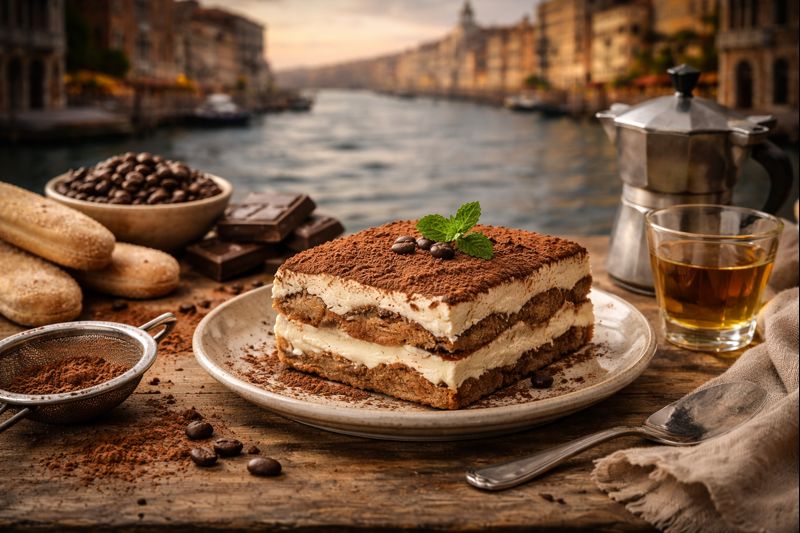
- Tiramisu, Italy’s iconic dessert, completes the culinary journey with layers of coffee, mascarpone, and cocoa. It pairs naturally with Vin Santo, reinforcing traditional sweetness, or with an Espresso Martini for a contemporary finish that echoes the dessert’s espresso notes.
Beyond pairings, Italian drinking culture itself deserves recognition, particularly through classic cocktails that reflect regional character and social ritual.
- The Negroni, originating in Florence, exemplifies balance through equal parts gin, Campari, and sweet vermouth. Its bitter profile aligns with the Italian tradition of aperitivo, designed to stimulate appetite and encourage conversation.
- The Aperol Spritz, closely associated with northern Italy, represents lightness and accessibility. Combining Aperol, prosecco, and soda, it reflects Italy’s preference for low-alcohol, social drinking experiences tied to late afternoons and communal gatherings.

- The Americano, a precursor to the Negroni, blends Campari, sweet vermouth, and soda water. It underscores Italy’s historical relationship with bitters and fortified wines, reinforcing the role of cocktails as cultural expressions rather than mere refreshments.
Ultimately, Italian cuisine appreciation day is not simply a celebration of food and drink, but a recognition of Italian cuisine as a cultural institution. It reflects centuries of adaptation, regional pride, and disciplined simplicity. Italian food culture values quality over excess, tradition over trend, and shared experience over spectacle. By honoring its historical roots, culinary evolution, and harmonious food-and-drink traditions, Italian cuisine continues to stand as a global benchmark for authenticity, balance, and enduring pleasure.
 Bar and Bites Consulting
Leave a comment